
Lacquer Paint
Lacquer paint is a fast-drying coating designed to form a smooth and hard finish. It is commonly used on furniture and woodwork as well as some metal surfaces.
Painter
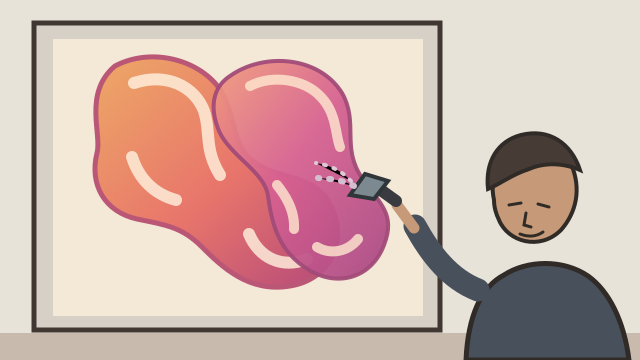
Craig Kauffman was an American artist known for spray-applied acrylic lacquer on vacuum-formed Plexiglass wall reliefs associated with Finish Fetish and Light and Space.
Kauffman's documented materials range from early oil paintings on canvas to sprayed acrylic lacquer on industrially shaped translucent plastic.
| Born | 1932 · Los Angeles, California, U.S. |
|---|---|
| Died | 2010 · Angeles City, Philippines |
| Nationality | American |
| Movements | Finish Fetish · Light and Space · early Abstract Expressionism |
| Paint types | Acrylic lacquer · Acrylic paint · Oil paint (early works) |
| Painting surfaces | Plexiglass and sheet acrylic (vacuum-formed plastic) · Canvas (early oils) · Paper (acrylic and ink studies) |
| Painting methods | Spray-painting sheet acrylic for even coverage; vacuum-forming plastic into raised shapes, then painting and finishing the reliefs |
| Common subjects | Abstract color fields, bulbous sculptural forms, translucent surfaces, reflective highlights, and shifts in light |
| Industrial process | Commercial vacuum forming of acrylic plastic, with artist-applied final color and finishing |
| Notable works | Red-Blue · Yellow Orange · Untitled (1968 sprayed-acrylic lacquer wall relief) |
Sources: LACMA: Yellow Orange and spray-painting process, Norton Simon Museum: sprayed acrylic lacquer on formed Plexiglass, MoMA: Red-Blue (1964), Estate catalogue raisonné: 1952 oil on canvas, Whitney Museum: acrylic and ink on paper, Smithsonian Archives: artist biography and associations, and Estate website: painting and industrial material practice.
Explore acrylic lacquer and acrylic paint used in Kauffman's molded reliefs, alongside the oil paint recorded in his earlier canvas work.
Lacquer paint is a fast-drying coating designed to form a smooth and hard finish. It is commonly used on furniture and woodwork as well as some metal surfaces.

Acrylic paint is a fast-drying, water-based paint made with pigment and an acrylic polymer binder. It is widely used in art and decorative projects because it is versatile and durable.

Oil paint is a slow-drying paint made with pigment and a drying oil binder. It is widely used for artwork because it blends smoothly and develops rich color.
Museum records document his vacuum-formed acrylic plastic wall reliefs, early stretched canvases, and acrylic-and-ink drawings on paper.

Plexiglass is a rigid acrylic sheet with a smooth, nonporous surface and sensitivity to incompatible solvents that can craze or damage the material.
Canvas is a woven fabric used as a flexible support for painting. Artist canvas is commonly made from cotton or linen and sold either raw or coated with a ground layer.

Paper is an absorbent sheet material made primarily from cellulose fibers. Its weight, sizing, surface texture, and wet strength determine how much paint it can accept before buckling, pilling, bleeding, or warping.
Discover Los Angeles painters who explored glossy industrial coatings, sprayed finishes, changing light, and surfaces beyond conventional canvas.

Billy Al Bengston was an American painter associated with postwar Los Angeles who adapted automotive lacquer, enamel, metallic paint, aluminum, and high-gloss finishing methods to fine-art painting.

Mary Corse is an American painter known for white acrylic paintings incorporating reflective glass microspheres that change in appearance with light and the viewer's position.

Robert Irwin was an American artist whose oil paintings and sprayed acrylic discs led to pioneering work with light and perception in California.

Ed Ruscha is an American Pop artist known for oil and airbrushed acrylic word paintings, roadside images, and gunpowder drawings on paper.
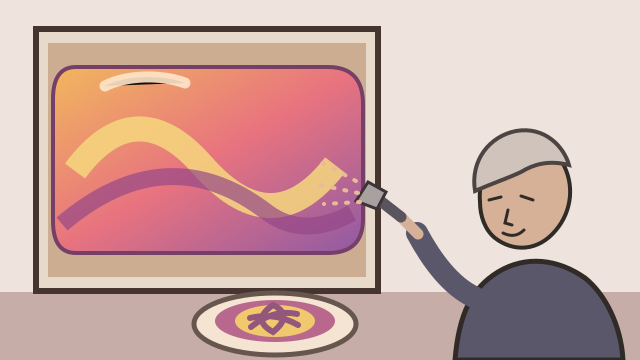
Judy Chicago is an American feminist artist known for sprayed automotive lacquer, acrylic painting, and porcelain china-paint work in The Dinner Party.