
Acrylic Paint
Acrylic paint is a fast-drying, water-based paint made with pigment and an acrylic polymer binder. It is widely used in art and decorative projects because it is versatile and durable.
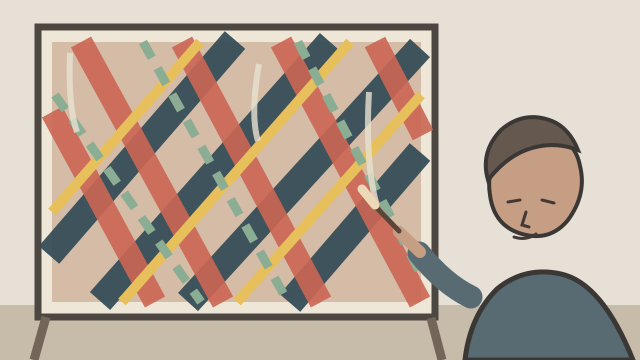
Painter
Ed Moses was an American abstract painter known for acrylic and oil grids, poured and scraped surfaces, and experimental resin work in Los Angeles.
Moses combined acrylic and oil with masking, diagonal grids, paint pours, scraping, and experimental resin on raw wood and unstretched canvas.
| Born | 1926 · Long Beach, California, U.S. |
|---|---|
| Died | 2018 · Venice, California, U.S. |
| Nationality | American |
| Movements | Los Angeles Cool School · Postwar abstraction |
| Paint types | Acrylic paint · Oil paint · Watercolor (works on paper) |
| Painting surfaces | Canvas (stretched and unstretched) · Raw wood panels · Painting board · Paper |
| Painting methods | Crossing diagonal masked grids, dripping and pouring paint, scraping back layers to expose raw wood, and repeating marks across canvases |
| Common subjects | Geometric and diagonal grids, floral silhouettes, monochrome abstractions, energetic paint marks, and overlapping color planes |
| Other materials | Graphite, charcoal, masking tape, powdered pigments, and resin applied to flexible unstretched supports |
| Notable works | Rose Screen (1963) · Abstract Painting (Red #1) (1975–76) · Wild Trac (1975) · Maintenance Man (1982) |
Sources: LACMA: experimental materials, drawing, and Ferus Gallery history, LACMA: Abstract Painting (Red #1), acrylic on gessoed canvas, LACMA: Untitled (1986), oil and acrylic on canvas, LACMA: Maintenance Man, acrylic on raw wood, UC Irvine museum: Wild Trac, acrylic on canvas backed by wood, LACMA: Rose Screen, graphite stenciling on panels, LACMA: poured, scraped painting and artist's 2018 death, and LACMA: resin on unstretched canvas and repetitive painted grids.
Acrylic and oil anchor Moses's grid paintings; watercolor appears in works on paper, while resin was among his more experimental coating systems.
Acrylic paint is a fast-drying, water-based paint made with pigment and an acrylic polymer binder. It is widely used in art and decorative projects because it is versatile and durable.

Oil paint is a slow-drying paint made with pigment and a drying oil binder. It is widely used for artwork because it blends smoothly and develops rich color.

Watercolor paint is a water-based art medium made with pigment and a water-soluble binder. It is known for transparent color that settles into absorbent paper.
Moses moved between gessoed canvas, unstretched fabric, raw wood, and rigid boards, exploiting each support through paint layers, stains, or scraping.
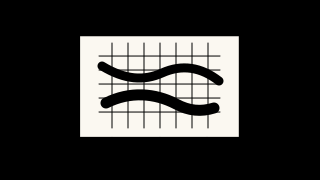
Canvas is a woven fabric support used for paintings, banners, bags, décor, and other projects. Artist canvas may be raw, sized, acrylic-primed, oil-primed, or factory-coated, and each condition changes how paint absorbs and bonds.
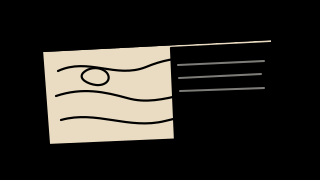
Wood is a natural, porous material with grain patterns and absorbency that vary by species and cut. Its surface may also contain knots, resin, or an existing finish.

Painting board is a rigid artist support made from hardboard, wood, or another stable panel material. It may be sold raw or prepared with a medium-specific ground layer.
Explore Los Angeles painters who used postwar abstraction, unconventional industrial materials, repeated grids, and experimental surface finishes.

Billy Al Bengston was an American painter associated with postwar Los Angeles who adapted automotive lacquer, enamel, metallic paint, aluminum, and high-gloss finishing methods to fine-art painting.
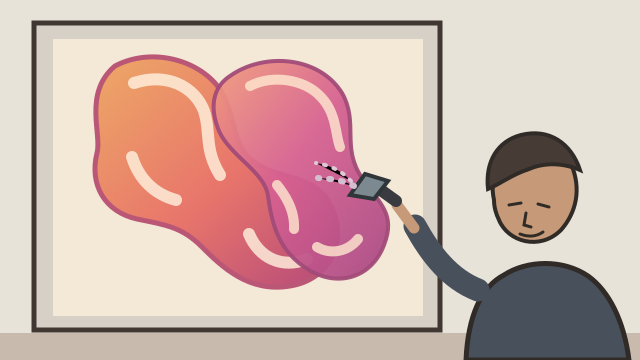
Craig Kauffman was an American artist known for spray-applied acrylic lacquer on vacuum-formed Plexiglass wall reliefs associated with Finish Fetish and Light and Space.

Ronald Davis was an American painter known for colored polyester-resin and fiberglass abstractions, shaped panels, optical geometry, and acrylic painting.