Lacquer Paint
Lacquer paint is a fast-drying coating designed to form a smooth and hard finish. It is commonly used on furniture and woodwork as well as some metal surfaces.
Painter
Judy Chicago is an American feminist artist known for sprayed automotive lacquer, acrylic painting, and porcelain china-paint work in The Dinner Party.
Explore Judy Chicago's lacquer-sprayed car hoods and acrylic reliefs, canvas-covered plywood paintings, and fired porcelain china-paint decorations.
| Born | July 20, 1939 · Chicago, Illinois, U.S. |
|---|---|
| Died | — |
| Nationality | American |
| Movements | Feminist art · Minimalism (early work) |
| Paint types | Automotive and acrylic lacquer · Acrylic paint · latex paint · ceramic overglaze (china paint) |
| Painting surfaces | Acrylic plastic and Plexiglass · Canvas-covered plywood · metal car hoods · porcelain plates |
| Painting methods | Spraying automotive and acrylic lacquer on metal or acrylic sheets; brush-applied porcelain overglaze with successive firings |
| Common subjects | Geometric color transitions, abstract forms, women's history, birth, identity, and feminist symbolism |
| Related materials | Embroidery, woven textiles, glaze-fired porcelain, and collaborative needlework in The Dinner Party |
| Notable works | Car Hood · Rainbow Pickett · The Dinner Party |
Sources: Judy Chicago: official biography, Artist archive: sprayed lacquer, latex, and acrylic supports, Artist archive: paintings and industrial coatings, Brooklyn Museum: china paint and textiles, National Museum of Women in the Arts: materials and movements, Artist interview: sprayed paint and porcelain firing, and Official website: material-based practice.
Chicago's early studio works used sprayed automotive and acrylic lacquer, as well as acrylic and latex paint; her porcelain used fired china paint.
Lacquer paint is a fast-drying coating designed to form a smooth and hard finish. It is commonly used on furniture and woodwork as well as some metal surfaces.

Acrylic paint is a fast-drying, water-based paint made with pigment and an acrylic polymer binder. It is widely used in art and decorative projects because it is versatile and durable.
Chicago painted car hoods, formed acrylic, canvas-covered plywood, and porcelain, selecting each surface for its technical and conceptual potential.

Plexiglass is a rigid acrylic sheet with a smooth, nonporous surface and sensitivity to incompatible solvents that can craze or damage the material.
Canvas is a woven fabric support used for paintings, banners, bags, décor, and other projects. Artist canvas may be raw, sized, acrylic-primed, oil-primed, or factory-coated, and each condition changes how paint absorbs and bonds.
Explore painters sharing Chicago's sprayed industrial finishes, Light and Space-era materials, or feminist work that extends into painted textiles.
Billy Al Bengston was an American painter associated with postwar Los Angeles who adapted automotive lacquer, enamel, metallic paint, aluminum, and high-gloss finishing methods to fine-art painting.
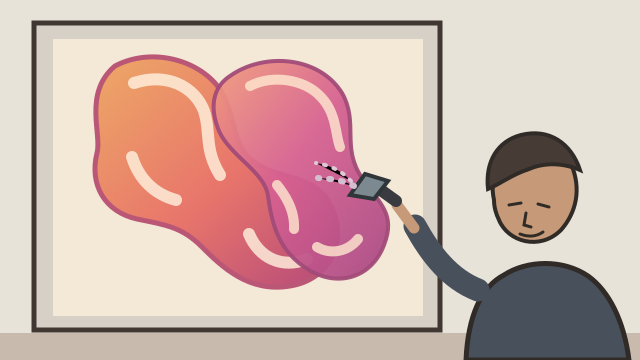
Craig Kauffman was an American artist known for spray-applied acrylic lacquer on vacuum-formed Plexiglass wall reliefs associated with Finish Fetish and Light and Space.
Faith Ringgold was an American painter known for oil paintings and acrylic story quilts combining painted canvas, fabric, and narratives of Black American life.

Mary Corse is an American painter known for white acrylic paintings incorporating reflective glass microspheres that change in appearance with light and the viewer's position.