
Acrylic Paint
Acrylic paint is a fast-drying, water-based paint made with pigment and an acrylic polymer binder. It is widely used in art and decorative projects because it is versatile and durable.

Painter
Keith Haring was an American artist known for outlined figures, public murals, subway drawings, vivid color, and recurring imagery addressing social and political themes.
Review key details about Keith Haring's life, career, New York art context, public work, and the social themes and visual language that shaped his practice.
| Born | May 4, 1958 · Reading, Pennsylvania, U.S. |
|---|---|
| Died | February 16, 1990 · New York City, New York, U.S. |
| Nationality | American |
| Movements | Pop Art and street art |
| Paint types | Acrylic paint · Enamel paint · Oil paint · Vinyl paint · Gouache · Fluorescent paint · Spray paint |
| Painting surfaces | Canvas · Paper · Cardboard · Vinyl · Wood · Fiberglass · Metal · Plaster |
| Painting methods | Spontaneous freehand outlines without preliminary sketches, followed by flat color and repeated motion marks |
| Other media | Chalk, sumi ink, marker, DayGlo, drawing, printmaking, and sculpture |
| Common subjects | Radiant babies, barking dogs, dancing figures, hearts, crowds, public life, sexuality, AIDS awareness, racism, consumer culture, violence, technology, and social connection |
| Notable works | Michael Stewart – USA for Africa · Safe Sex · Untitled (1982) |
Sources: Keith Haring Foundation biography, Keith Haring Foundation: Haring All-Over, Keith Haring Foundation: Michael Stewart – USA for Africa, Whitney Museum: Safe Sex, Whitney Museum: Untitled (1981), The Broad: Untitled (1982), Museum Brandhorst: Untitled (1982), National Gallery of Victoria: Keith Haring | Jean-Michel Basquiat: Crossing Lines, and Jordan Schnitzer Museum of Art: Keith Haring research guide.
See the paint types documented in Haring's work, with links to PaintZeal references explaining each medium's properties, uses, and working characteristics.
Acrylic paint is a fast-drying, water-based paint made with pigment and an acrylic polymer binder. It is widely used in art and decorative projects because it is versatile and durable.
Enamel paint is a broad category of coatings designed to form a hard and durable finish. Modern enamels may use either oil-based or water-based binders.

Oil paint is a slow-drying paint made with pigment and a drying oil binder. It is widely used for artwork because it blends smoothly and develops rich color.

Vinyl paint is a flexible specialty coating used to recolor or restore vinyl and related interior or trim surfaces. Some products contain vinyl resin, while other vinyl-and-fabric coatings use different flexible binders and adhesion systems, so the selected product should match both the material and intended exposure.

Gouache paint is an opaque, water-based art medium made with pigment and a water-soluble binder. Traditional formulas dry to a matte finish and can be reactivated with water.

Fluorescent paint uses highly vivid pigments that appear especially bright under strong light and ultraviolet illumination. Unlike glow-in-the-dark paint, it does not continue glowing after the light source is removed.

Spray paint is a liquid coating packaged in a pressurized can and applied as a fine aerosol. It creates an even finish without requiring a brush or roller.
See the surface types documented in Haring's work, with links to PaintZeal references explaining how each support behaves and is prepared for painting.
Canvas is a woven fabric used as a flexible support for painting. Artist canvas is commonly made from cotton or linen and sold either raw or coated with a ground layer.

Paper is an absorbent sheet material made from pressed fibers. Its weight, sizing, and surface texture determine how much moisture it can handle and how paint spreads.

Cardboard is a paper-based sheet material made from compressed fibers, often with corrugated fluting between liner sheets. It is lightweight and absorbent, so heavy wet coats can soften or warp it.

Vinyl is a synthetic plastic used in both flexible and rigid products. Its additives, finish, and tendency to expand with heat can affect coating adhesion.
Wood is a natural, porous material with grain patterns and absorbency that vary by species and cut. Its surface may also contain knots, resin, or an existing finish.

Fiberglass is a composite material made from glass fibers embedded in resin. Finished pieces usually have a smooth resin or gelcoat surface rather than exposed fibers.

Metal is a hard, nonporous material used in furniture, fixtures, equipment, vehicles, and architectural components. Its smooth surface gives ordinary paint little mechanical grip, and bare iron or steel can also corrode beneath a weak coating system.
Plaster is a smooth or textured wall finish made from gypsum, lime, cement, or similar mineral binders. New plaster remains porous as it cures and dries.
Explore painters similar to Keith Haring through New York street culture, bold graphic imagery, public painting, spray media, and socially engaged subjects.
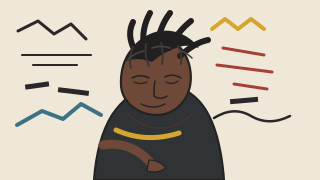
Jean-Michel Basquiat was an American artist known for paintings combining color, handwritten text, anatomy, crowns, cultural references, music, and history.

Andy Warhol was an American Pop artist known for transforming consumer products, celebrities, and mass-media photographs into paintings and repeated screen-printed images.

RUN is a street artist and muralist known for large-scale figurative work, often developed from watercolor studies and executed with masonry paint and other mural materials.