
Oil Paint
Oil paint is a slow-drying art medium made with pigment and a drying-oil binder that allows extended working time, smooth blending, and layered application.
Painter
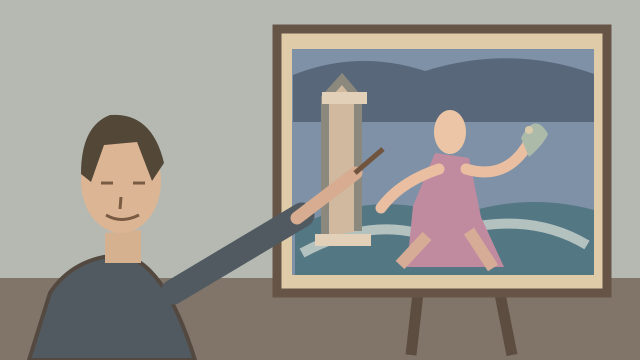
Hans von Aachen was a German-born Northern Mannerist court painter who combined Venetian color, sophisticated allegories, and lively portraits for Rudolf II in Prague.
Von Aachen worked in Italy before serving Rudolf II in Prague. His Tarquinius and Lucretia was made for the emperor, while his two-sided alabaster painting exploits the natural patterns of the stone.
| Born | 1552 · Cologne, Holy Roman Empire (now Germany) |
|---|---|
| Died | 1615 · Prague, Kingdom of Bohemia (now Czechia) |
| Nationality | German (active in Italy and Prague) |
| Movements | Northern Mannerism (Prague court) |
| Paint types | Oil Paint |
| Painting surfaces | Canvas · Wood · Alabaster (no surface page yet) |
| Painting methods | Oil paintings on canvas and wood, court allegories, portraiture and mythological works exploiting the natural veining of alabaster |
| Common subjects | Court portraits, mythological lovers, Roman stories, allegories, and moralizing genre scenes |
| Notable works | Tarquinius and Lucretia · The Procuress · Andromeda and Aeolus · Allegory on the Turkish Wars (drawing) |
Sources: Kunsthistorisches Museum: Tarquinius and Lucretia (canvas), Kunsthistorisches Museum: The Procuress (wood), Kunsthistorisches Museum: Mythological paintings on alabaster, National Gallery of Art: Hans von Aachen and works on paper.
The Kunsthistorisches Museum catalogs von Aachen's paintings on canvas and wood. The National Gallery of Art's Allegory on the Turkish Wars is a pen-and-ink drawing with watercolor rather than an oil painting.
Oil paint is a slow-drying art medium made with pigment and a drying-oil binder that allows extended working time, smooth blending, and layered application.
Canvas and wood support Tarquinius and Lucretia and The Procuress, respectively. The Kunsthistorisches Museum documents paintings on natural alabaster separately; alabaster is not plaster and no surface tile exists for it yet.

Canvas is a woven fabric support, commonly cotton or linen, used for painting and sold either raw or prepared with a compatible ground layer.

Wood is a natural, porous material with grain patterns and absorbency that vary by species and cut. Its surface may also contain knots, resin, or an existing finish.
Spranger and Arcimboldo also worked within the artistic culture surrounding Rudolf II, but developed different pictorial approaches.
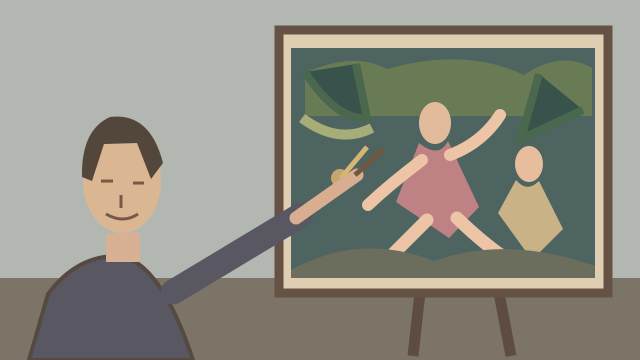
Bartholomeus Spranger was a Flemish-born Northern Mannerist painter who brought elegantly twisting figures, mythological allegories, and dramatic colors to Rudolf II's Prague court.
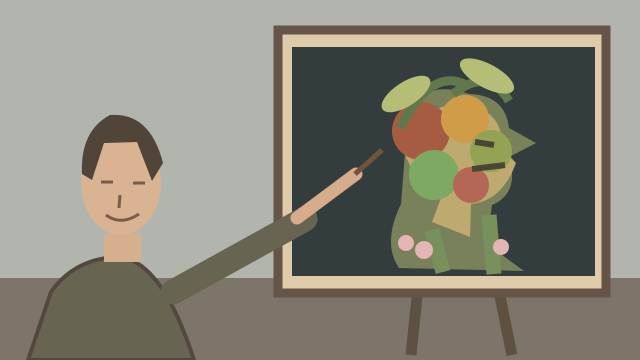
Giuseppe Arcimboldo was a Milanese Mannerist court painter whose fantastical portraits assemble fruit, flowers, animals, and objects into human faces.