
Oil Paint
Oil paint is a slow-drying art medium made with pigment and a drying-oil binder that allows extended working time, smooth blending, and layered application.
Painter
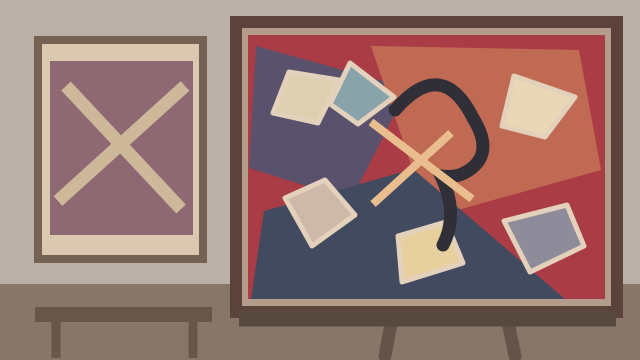
Julian Schnabel is an American painter and filmmaker associated with Neo-Expressionism, known for monumental paintings that incorporate broken ceramic plates, thick brushwork, and unusual supports.
Schnabel's plate paintings are paintings as well as physical constructions: ceramic fragments may be embedded in resin filler on wooden supports, with paint added over the uneven surface. His velvet portraits represent another distinct material practice.
| Born | 1951 · Brooklyn, New York, U.S. |
|---|---|
| Died | — |
| Nationality | American |
| Movements | Neo-Expressionism · late twentieth-century American figurative painting |
| Paint types | Oil paint; wax in the mixed-media plate painting Bones and Trumpets Rubbing Against Each Other Towards Infinity (1981) |
| Painting surfaces | Wood panels with broken ceramics and polyester filler · velvet fabric in Portrait of Andy Warhol (1982) |
| Painting methods | Painted gestural figures and symbols across plates fixed to wood with Bondo polyester filler; used rough texture and assembled materials to push paintings into three dimensions |
| Common subjects | Fragmented figures, heads and portraits, symbols, mythic narratives, cultural history, and references to art and music |
| Notable works | Bones and Trumpets Rubbing Against Each Other Towards Infinity (1981) · Portrait of Andy Warhol (1982) · Spain (1986) |
Sources: The Met: Bones and Trumpets..., Guggenheim Bilbao: Spain, Smithsonian Hirshhorn: Portrait of Andy Warhol, Guggenheim: Julian Schnabel biography.
The Met identifies oil and wax alongside broken ceramics on wood in Bones and Trumpets...; the Guggenheim Bilbao records oil, plates and Bondo on wood in Spain. The Smithsonian records oil on velvet for Portrait of Andy Warhol. Ceramic shards, Bondo, and wax are not additional conventional paint-type tiles.
Oil paint is a slow-drying art medium made with pigment and a drying-oil binder that allows extended working time, smooth blending, and layered application.
Wood is the rigid base of Schnabel's documented plate paintings, even when the image extends over attached pottery. Velvet is the textile support for his 1982 Warhol portrait; it is not simply a painted picture of fabric.

Wood is a natural, porous material whose grain, absorbency, knots, resin, species, and existing finish all influence paint preparation and adhesion.

Fabric is a flexible material made by weaving, knitting, or bonding fibers, with fiber content, texture, stretch, and washability affecting paint adhesion.
Kiefer likewise pushed painted imagery into mixed-media relief, while Basquiat shared Schnabel's 1980s New York revival of vigorous figurative painting with very different visual language.
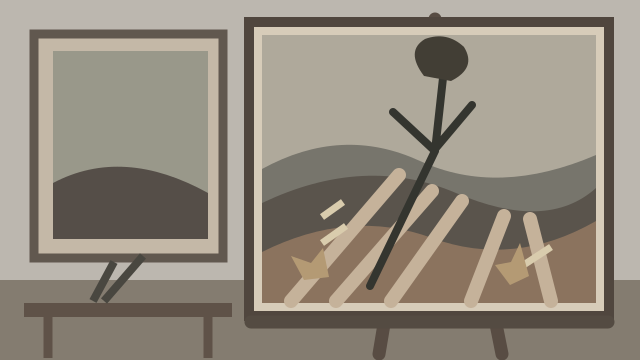
Anselm Kiefer is a German painter and sculptor known for monumental, heavily layered images of landscapes, history, literature, and memory using paint alongside straw, lead, and other materials.
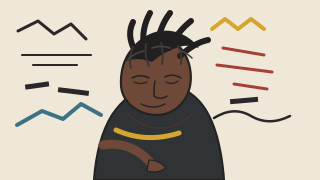
Jean-Michel Basquiat was an American artist known for paintings combining color, handwritten text, anatomy, crowns, cultural references, music, and history.