
Bridget Riley
Bridget Riley is a British painter whose abstract compositions create optical movement through repeated lines, curves, shapes, and structured color.
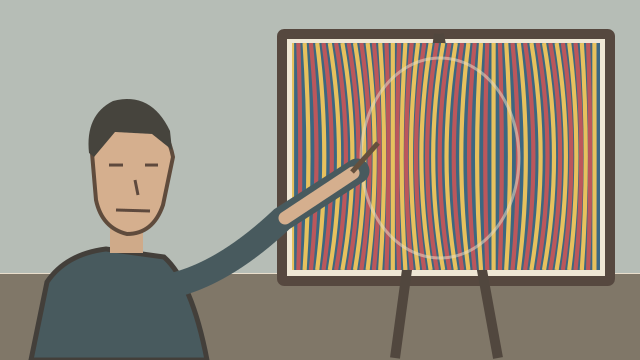
Painter
Julian Stanczak was a Polish-born American Op Art painter whose fine stripes and controlled color shifts make fixed geometric patterns seem to shimmer.
Stanczak used ordered stripes and color sequences to create optical effects, drawing on the eye’s response to adjacent hues and repeated patterns.
| Full name | Julian Stanczak |
|---|---|
| Born | 1928 · Borownica, Poland |
| Died | 2017 · Seven Hills, Ohio, United States |
| Nationality | Polish-born American |
| Movements | Op Art |
| Paint types | Acrylic Paint |
| Other media | — |
| Other materials | — |
| Painting surfaces | Canvas |
| Painting methods | Precise repeated stripes, closely spaced colored bands, color filtering, regular geometric shapes, and controlled shifts of contrast |
| Common subjects | Vertical lines, undulating bands, color sequences, overlapping grids, and apparent fields of light |
| Notable works | The Duel · Filtered Yellow · Flow · Fluctuation |
Sources: MoMA: The Duel (1963), synthetic polymer paint on canvas, Cleveland Museum of Art: Filtered Yellow (1968), acrylic on canvas, Cleveland Museum of Art: Flow (1971), acrylic on canvas, SFMOMA: Julian Stanczak biography.
Stanczak used acrylic to build precise stripes and color sequences, with adjacent hues creating optical movement across the canvas in documented works.
The Cleveland Museum of Art records Filtered Yellow and Flow as acrylic on canvas. MoMA catalogs The Duel (1963) as synthetic polymer paint on canvas, a broader description that does not identify a specific binder. Stanczak’s repeated bands and color transitions make these flat painted surfaces seem to move.
Sources: Cleveland Museum of Art: Filtered Yellow, acrylic on canvas; Cleveland Museum of Art: Flow, acrylic on canvas; MoMA: The Duel, synthetic polymer paint on canvas.
Collection records show Julian Stanczak working on Canvas; the examples below distinguish painted supports from backing, collage, or sculptural components.
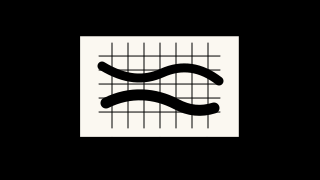
Stanczak’s optical paintings, including The Duel and Filtered Yellow, are documented on canvas. He used repeated bands and carefully calibrated color transitions to create the impression of movement across the flat surface. These museum records support canvas as the format for his geometric abstractions.
Sources: MoMA: The Duel (1963), synthetic polymer paint on canvas, Cleveland Museum of Art: Filtered Yellow (1968), acrylic on canvas, Cleveland Museum of Art: Flow (1971), acrylic on canvas, SFMOMA: Julian Stanczak biography.
Riley and Anuszkiewicz also explored optical perception, but Stanczak was especially interested in subtle color filtering and line interactions.
Bridget Riley is a British painter whose abstract compositions create optical movement through repeated lines, curves, shapes, and structured color.
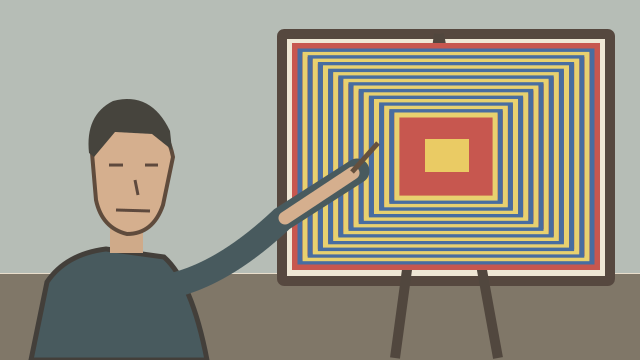
Richard Anuszkiewicz was an American Op Art painter whose radiant squares, repeated lines, and vivid complementary colors create shimmering visual effects.