
Tschabalala Self
Tschabalala Self builds figurative paintings from paint, printed imagery, and sewn fabric, using material collage to depict Black life and identity.

Painter
Njideka Akunyili Crosby is a Nigerian-born painter known for layered acrylic scenes on paper combining photo transfers, collage, and domestic imagery.
Akunyili Crosby's layered images combine acrylic paint with solvent transfers, colored pencils, charcoal, and collaged photographs on paper.
| Born | 1983 · Enugu, Nigeria |
|---|---|
| Died | — |
| Nationality | Nigerian |
| Movements | — |
| Paint types | Acrylic paint · Oil paint (selected work) |
| Painting surfaces | Paper (large-format works, sometimes mounted on panels) |
| Painting methods | Layering acrylic and drawing over compositions with acetone-transferred photocopies, cut paper, and adhered printed fabric |
| Common subjects | Family, domestic interiors, Nigerian and American cultural memories, intimacy, identity, and the African diaspora |
| Other materials | Colored pencil, charcoal, printed commemorative fabric, collage, and photocopies transferred with acetone |
| Notable works | Nwantinti · Mother and Child · Portals · I Still Face You |
Sources: Metropolitan Museum of Art: Mother and Child, acrylic transfers and fabric on paper, National Portrait Gallery: artist explains acetone transfer method, Studio Museum in Harlem: Nwantinti, acrylic and transfers on paper, LACMA: acrylic, oil, collage and fabric on paper, Artist's catalogue: materials and named representative works, Artist's official biography: born Enugu in 1983, and Yale Center for British Art: acrylic, transfers and colored pencil on paper.
Akunyili Crosby uses acrylic and oil in layered paintings; examples connect the media to works and show how they support her collage-based images.

The Met lists acrylic in Crosby’s Mother and Child (2016), combined with transfer printing, colored pencil, cut-and-pasted paper, and printed fabric on paper. Acrylic is one applied paint within a dense collage, while the transfer and attached materials remain separate components of the surface.

LACMA documents oil alongside acrylic in Crosby’s Bush Girl, I Still Face You, I See You in My Eyes (2015). Transfer imagery, fabric, collage, colored pencil, and charcoal appear alongside the paint, showing how she layers photographic and painted elements without treating them as one medium.
Sources: The Met: Mother and Child, LACMA: Bush Girl, I Still Face You, I See You In My Eyes.; SFMOMA: Janded
Documented works by Njideka Akunyili Crosby use Paper, with examples below clarifying when a material is a painted ground, backing, or constructed element.

Crosby builds large-format compositions on paper, combining acrylic transfers and fabric with the sheet support. Some works are mounted onto panels for display, but paper remains the painted surface beneath the transfers, collage, and drawn marks; this layered construction distinguishes them from conventional oil canvases.
Sources: Metropolitan Museum of Art: Mother and Child, acrylic transfers and fabric on paper, National Portrait Gallery: artist explains acetone transfer method, Studio Museum in Harlem: Nwantinti, acrylic and transfers on paper, LACMA: acrylic, oil, collage and fabric on paper, Artist's catalogue: materials and named representative works.
Explore artists whose paintings combine Black figuration, personal narratives, photographic collage, textile references, and layered materials.
Tschabalala Self builds figurative paintings from paint, printed imagery, and sewn fabric, using material collage to depict Black life and identity.

Mickalene Thomas is an American painter known for acrylic and enamel portraits with rhinestones, collage, and patterned interiors celebrating Black women.
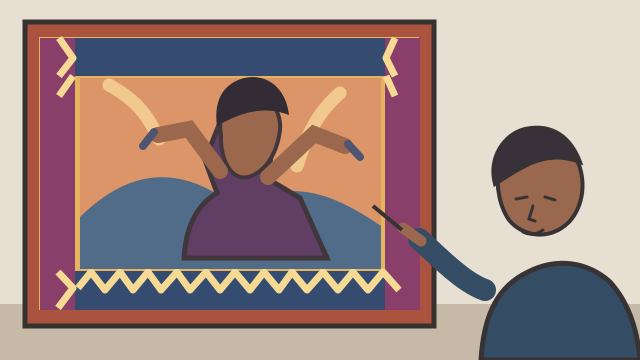
Emma Amos was an American painter whose oil and acrylic figures on canvas often incorporate handwoven textiles and African fabric borders in many works.

Derrick Adams is an American painter who combines geometric portraits, acrylic color, and paper, fabric, and painted wood into layered compositions.