
Oil Paint
Oil paint is a slow-drying art medium made with pigment and a drying-oil binder that allows extended working time, smooth blending, and layered application.
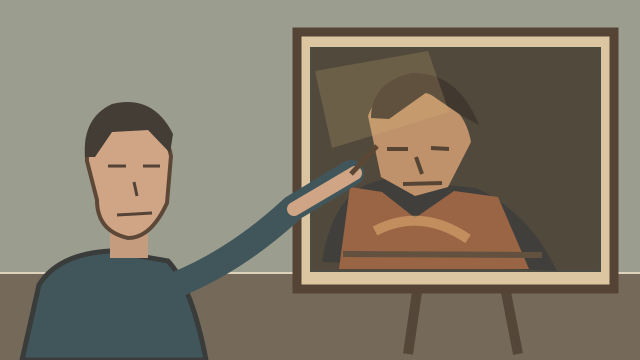
Painter
Rembrandt was a Dutch Baroque-era painter celebrated for expressive portraits, biblical scenes, textured oil paint, and subtle theatrical lighting.
Rembrandt built distinctive portraits and dramatic stories through varied oil paint texture, expressive faces, and controlled areas of light.
| Born | 1606 · Leiden, Dutch Republic (now Netherlands) |
|---|---|
| Died | 1669 · Amsterdam, Dutch Republic (now Netherlands) |
| Nationality | Dutch |
| Movements | Baroque (Dutch Golden Age) |
| Paint types | Oil Paint |
| Painting surfaces | Canvas · Wood |
| Painting methods | Thick impasto for highlights, thinner shadow passages, visible brushwork, scraping into wet paint, and careful shifts in illumination |
| Common subjects | Self-portraits, Amsterdam militia groups, wealthy sitters, biblical scenes, elderly faces, and historical subjects |
| Notable works | The Night Watch · Self-Portrait at the Age of 63 · Self-Portrait (c. 1628) · The Jewish Bride |
| Distinct tradition | Rembrandt belongs to the Dutch Golden Age; Baroque is a broad international period label, not proof of membership in an Italian Baroque group. |
Sources: Rijksmuseum: The Night Watch, oil on canvas, Rijksmuseum: Self-Portrait (c. 1628), oil on panel, National Gallery: Self Portrait at the Age of 63, oil on canvas.
Rembrandt painted portraits and narrative scenes in oil, often varying paint thickness across the same canvas or panel.
Oil paint is a slow-drying art medium made with pigment and a drying-oil binder that allows extended working time, smooth blending, and layered application.
The Rijksmuseum catalogs The Night Watch as oil on canvas and his early Self-Portrait as oil on a wood panel.

Canvas is a woven fabric support, commonly cotton or linen, used for painting and sold either raw or prepared with a compatible ground layer.

Wood is a natural, porous material with grain patterns and absorbency that vary by species and cut. Its surface may also contain knots, resin, or an existing finish.
Caravaggio used dramatic darkness and direct human observation; Vermeer worked within a separate Dutch genre-painting tradition of composed light.
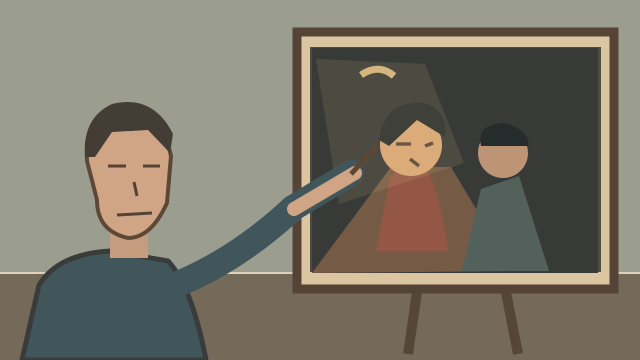
Caravaggio was an Italian Baroque painter known for dramatically lit biblical scenes, unidealized models, and startling contrasts of light and shadow.

Johannes Vermeer was a Dutch Baroque-era painter famed for quiet interiors, delicate daylight, luminous colors, and closely observed everyday scenes.