
Oil Paint
Oil paint is a slow-drying art medium made with pigment and a drying-oil binder that allows extended working time, smooth blending, and layered application.
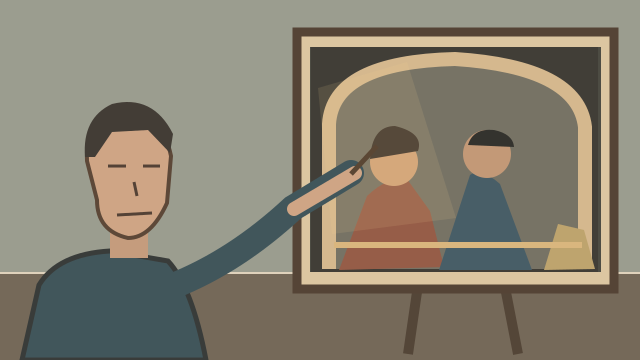
Painting Movement
Baroque painting emerged around 1600 in Italy, bringing dramatic light, expressive figures, and immediate human emotion to religious and historical scenes while related styles developed across Europe.
Baroque is a broad historical style rather than one formal painters' group. Dramatic Italian painting and seventeenth-century Dutch art developed in different cultural and religious settings.
| Origins | Late sixteenth- and early seventeenth-century Italy, particularly Rome and Bologna |
|---|---|
| Approximate period | About 1600–1750, varying across regions |
| Regional traditions | Italian Baroque, Flemish Baroque, and other European forms; the Dutch Golden Age overlaps historically but has distinctive subject matter and styles |
| Defining characteristics | Dramatic chiaroscuro, naturalistic figures, emotional intensity, staged gestures, and a strong sense of movement |
| Common subjects | Religious history, mythological stories, portraits, group scenes, and, in the Dutch Republic, everyday interiors and civic life |
| Famous painters | Caravaggio, Artemisia Gentileschi, Peter Paul Rubens, Diego Velázquez, Rembrandt, and Johannes Vermeer, Frans Hals, Judith Leyster (Dutch Golden Age), and Anthony van Dyck (Flemish Baroque) |
| Paint medium | Oil paint was widely used on portable paintings; technical analysis has identified limited egg-tempera passages in specific works by Caravaggio |
| Painting surfaces | Canvas and wood panels were common supports; some major decorations were frescoes on plaster |
| Earlier influence | Renaissance naturalism and classical painting, followed by the experiments of artists such as Annibale Carracci and Caravaggio |
| Later response | Neoclassicism renewed its emphasis on classical restraint in the eighteenth century |
| Classification note | Not all Dutch Golden Age painters share the theatrical look of Italian Baroque; Rembrandt and Vermeer are included as contrasting seventeenth-century examples |
Sources: The Met: Annibale Carracci and Baroque origins, The Met: Caravaggio's Denial of Saint Peter, Rijksmuseum: Rembrandt's Night Watch, and National Gallery of Art: Vermeer's Woman Holding a Balance.
Oil dominated the portable paintings documented here. Caravaggio's egg-tempera passages in particular white details are a narrow technical exception, not a separate defining Baroque paint style.
Oil paint is a slow-drying art medium made with pigment and a drying-oil binder that allows extended working time, smooth blending, and layered application.

Traditional tempera is an artist paint made by combining pigment with an emulsion binder. Egg yolk is the best-known traditional binder, but the broader tempera category can include other emulsion recipes, so a museum record that says only “tempera” does not always identify the exact binder.
Caravaggio and Artemisia Gentileschi painted in Italy, Rubens and Van Dyck shaped Flemish Baroque, and Velázquez served the Spanish court. Rembrandt, Vermeer, Hals, and Leyster represent distinct Dutch Golden Age approaches.
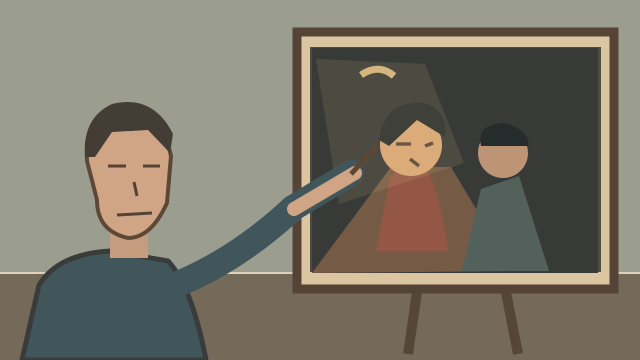
Caravaggio was an Italian Baroque painter known for dramatically lit biblical scenes, unidealized models, and startling contrasts of light and shadow.
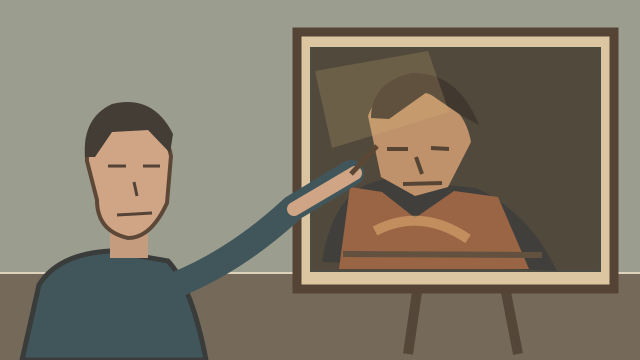
Rembrandt was a Dutch Baroque-era painter celebrated for expressive portraits, biblical scenes, textured oil paint, and subtle theatrical lighting.

Johannes Vermeer was a Dutch Baroque-era painter famed for quiet interiors, delicate daylight, luminous colors, and closely observed everyday scenes.
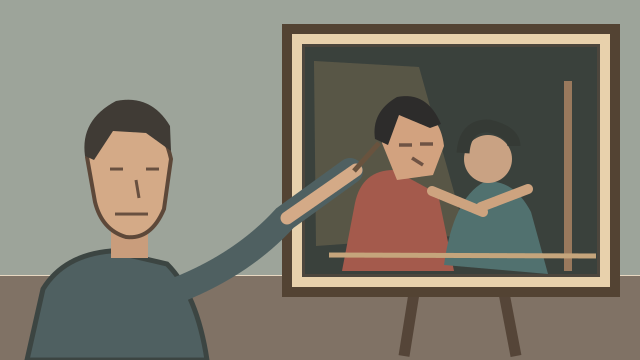
Artemisia Gentileschi was an Italian Baroque painter known for powerful biblical heroines, dramatic oil paintings, and boldly lit narrative scenes.
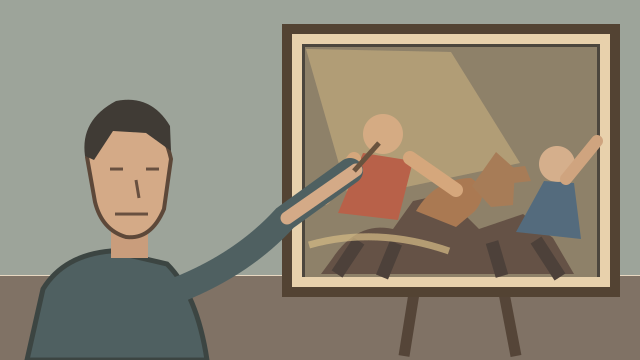
Peter Paul Rubens was a Flemish Baroque painter celebrated for dynamic mythological scenes, sweeping compositions, rich color, and large oil paintings.
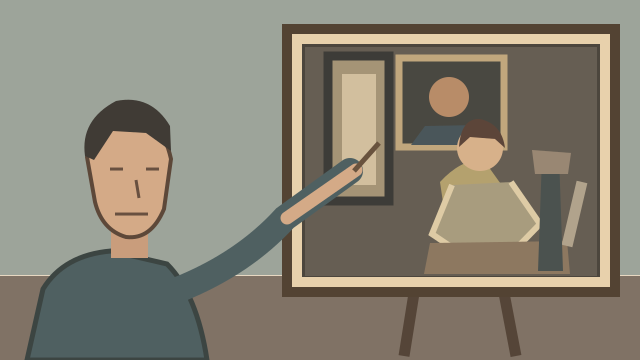
Diego Velázquez was a Spanish Baroque painter whose naturalistic royal portraits, subtle brushwork, and complex interiors transformed European court painting.
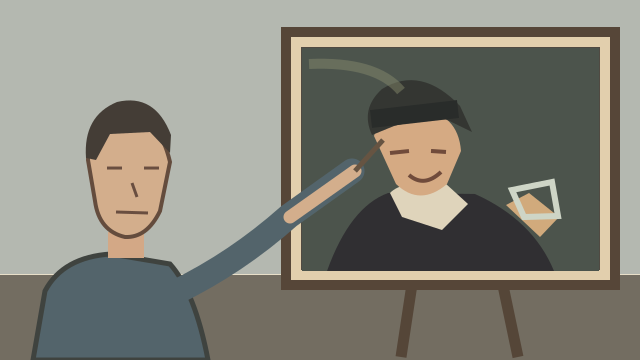
Frans Hals was a Dutch Golden Age painter whose lively portraits, laughing sitters, and energetic brushstrokes captured people with unusual immediacy.
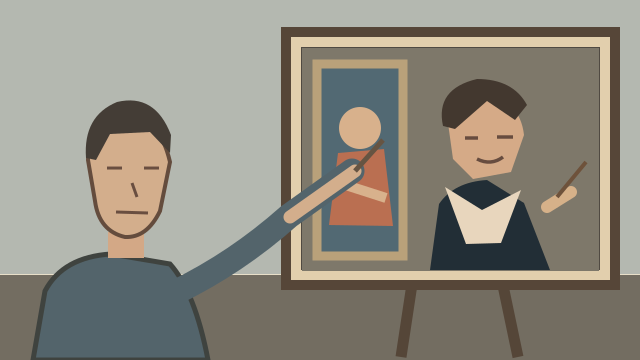
Judith Leyster was a Dutch Golden Age painter known for lively musicians, informal domestic scenes, and an assured self-portrait showing her at work.
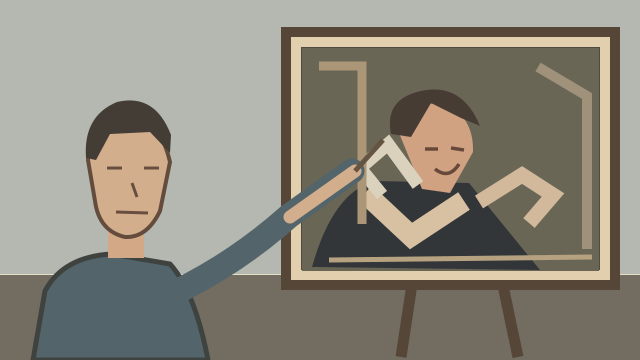
Anthony van Dyck was a Flemish Baroque painter celebrated for elegant royal portraits, expressive gestures, and refined oil-painted figures.
Renaissance painting helped establish the figure studies and classical forms later developed in Baroque art. Neoclassicism came afterward, reasserting clearer contours and restrained compositions.
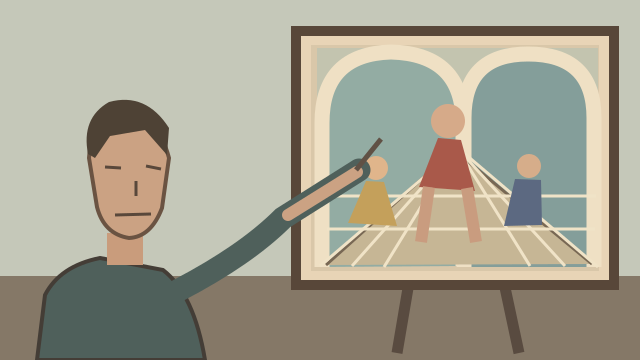
Renaissance painting developed across Europe as artists revived classical ideas, studied the human figure, and used perspective, light, and composition to create convincing spaces.
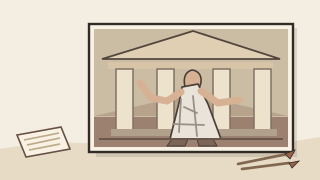
Neoclassicism emerged in eighteenth-century Europe, drawing on Greek and Roman art to create paintings with clear contours, balanced forms, and moral themes.