
Oil Paint
Oil paint is a slow-drying art medium made with pigment and a drying-oil binder that allows extended working time, smooth blending, and layered application.
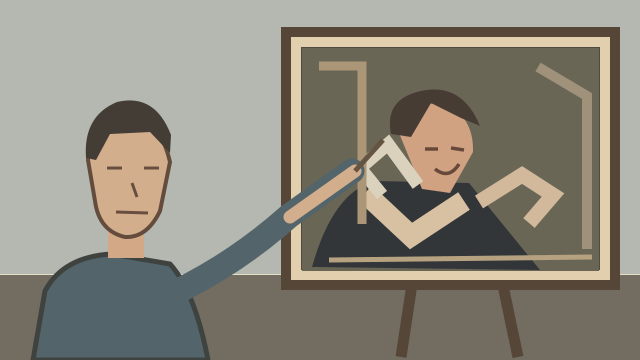
Painter
Anthony van Dyck was a Flemish Baroque painter celebrated for elegant royal portraits, expressive gestures, and refined oil-painted figures.
Van Dyck developed a graceful portrait style in Antwerp and Italy before becoming court painter to Charles I in England.
| Born | 1599 · Antwerp, Spanish Netherlands (now Belgium) |
|---|---|
| Died | 1641 · London, England |
| Nationality | Flemish |
| Movements | Flemish Baroque |
| Paint types | Oil Paint |
| Painting surfaces | Canvas · Wood |
| Painting methods | Fluid oil brushwork, graceful elongated figures, luminous flesh tones, elaborate textile passages, and carefully arranged portrait settings |
| Common subjects | Charles I, English aristocrats, Flemish nobles, religious narratives, allegorical figures, and royal families |
| Notable works | Equestrian Portrait of Charles I · James Stuart, Duke of Richmond and Lennox · Charity · Charles I at the Hunt |
| Regional context | Van Dyck belongs to Flemish Baroque and later English court portraiture; his techniques differed from Dutch Golden Age genre painting. |
Sources: National Gallery: Equestrian Portrait of Charles I, oil on canvas, National Gallery: Charity, oil on wood, The Met: James Stuart, Duke of Richmond and Lennox, oil on canvas.
The National Gallery and the Met document oil as Van Dyck's primary painting medium for both portraits and allegorical figures.
Oil paint is a slow-drying art medium made with pigment and a drying-oil binder that allows extended working time, smooth blending, and layered application.
Equestrian Portrait of Charles I and James Stuart are oil on canvas; the National Gallery catalogs Charity as oil on wood, probably oak.

Canvas is a woven fabric support, commonly cotton or linen, used for painting and sold either raw or prepared with a compatible ground layer.

Wood is a natural, porous material with grain patterns and absorbency that vary by species and cut. Its surface may also contain knots, resin, or an existing finish.
Van Dyck learned alongside Rubens's Antwerp circle; Hals took a looser approach to personality and expression in Dutch portraiture.
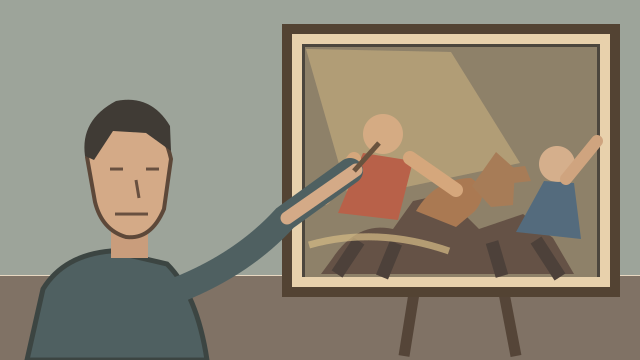
Peter Paul Rubens was a Flemish Baroque painter celebrated for dynamic mythological scenes, sweeping compositions, rich color, and large oil paintings.
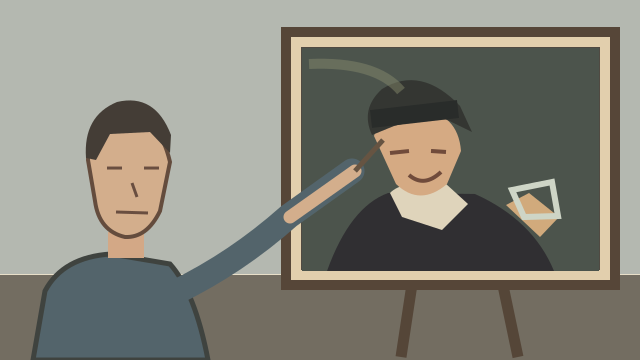
Frans Hals was a Dutch Golden Age painter whose lively portraits, laughing sitters, and energetic brushstrokes captured people with unusual immediacy.