
Oil Paint
Oil paint is a slow-drying art medium made with pigment and a drying-oil binder that allows extended working time, smooth blending, and layered application.
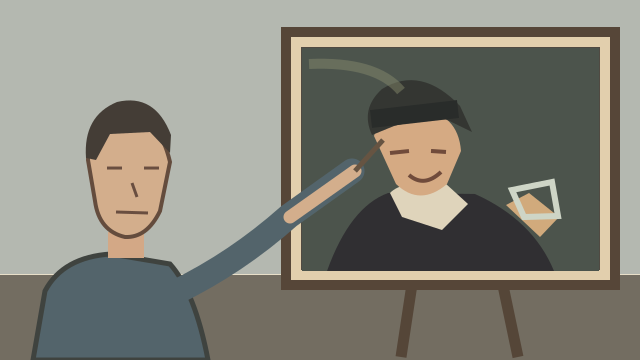
Painter
Frans Hals was a Dutch Golden Age painter whose lively portraits, laughing sitters, and energetic brushstrokes captured people with unusual immediacy.
Hals made portrait sitters feel present and animated with apparently spontaneous, closely judged strokes of oil paint.
| Born | c. 1582–83 · Antwerp, Spanish Netherlands (now Belgium) |
|---|---|
| Died | 1666 · Haarlem, Dutch Republic (now Netherlands) |
| Nationality | Dutch |
| Movements | Dutch Golden Age (Baroque era) |
| Paint types | Oil Paint |
| Painting surfaces | Canvas |
| Painting methods | Swift, broken visible strokes, loosely suggested fabrics and hair, layered dark underpaint, and accents of light over prepared grounds |
| Common subjects | Haarlem civic guards, prosperous merchants, married couples, musicians, drinkers, and lively everyday figures |
| Notable works | The Merry Drinker · The Laughing Cavalier · Banquet of the Officers of the St George Civic Guard · Portrait of a Man |
| Birth date | The Rijksmuseum dates his birth to about 1582 or 1583; the exact year is not established. |
Sources: Rijksmuseum: The Merry Drinker, oil on canvas, National Gallery of Art: Portrait of a Man, Frans Hals Museum: life and brushwork.
Hals made his renowned portraits and genre paintings using oil paint, with varying thickness and distinctly visible strokes.
Oil paint is a slow-drying art medium made with pigment and a drying-oil binder that allows extended working time, smooth blending, and layered application.
The Rijksmuseum identifies The Merry Drinker as oil on canvas; the National Gallery of Art also catalogs Portrait of a Man on canvas.

Canvas is a woven fabric support, commonly cotton or linen, used for painting and sold either raw or prepared with a compatible ground layer.
Leyster worked in the same Haarlem painting milieu, while Rembrandt explored a more introspective type of Dutch oil portrait.
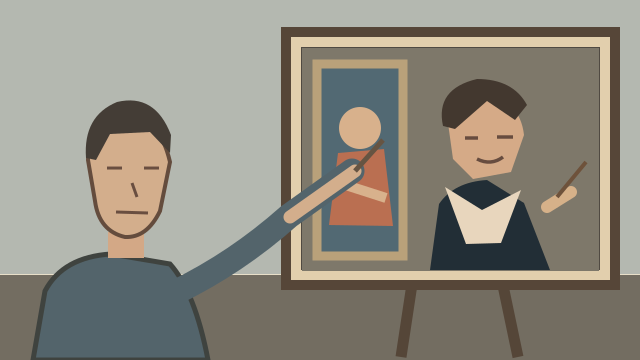
Judith Leyster was a Dutch Golden Age painter known for lively musicians, informal domestic scenes, and an assured self-portrait showing her at work.
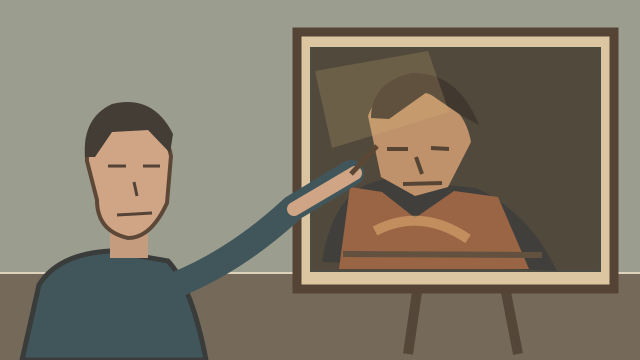
Rembrandt was a Dutch Baroque-era painter celebrated for expressive portraits, biblical scenes, textured oil paint, and subtle theatrical lighting.