
Oil Paint
Oil paint is a slow-drying art medium made with pigment and a drying-oil binder that allows extended working time, smooth blending, and layered application.
Painter
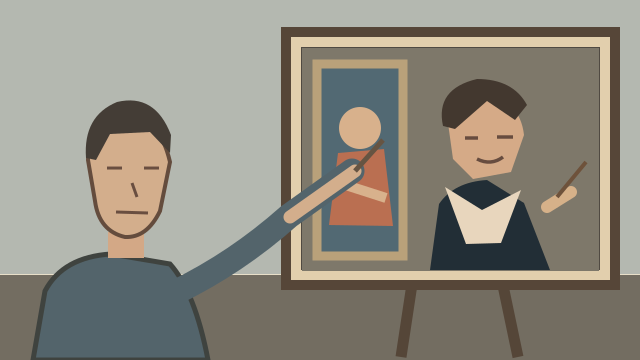
Judith Leyster was a Dutch Golden Age painter known for lively musicians, informal domestic scenes, and an assured self-portrait showing her at work.
Leyster was a recognized Haarlem master painter whose music-making scenes and portraits show bright expressions and confident brushwork.
| Born | 1609 · Haarlem, Dutch Republic (now Netherlands) |
|---|---|
| Died | 1660 · Heemstede, Dutch Republic (now Netherlands) |
| Nationality | Dutch |
| Movements | Dutch Golden Age (Baroque era) |
| Paint types | Oil Paint |
| Painting surfaces | Canvas · Wood |
| Painting methods | Varied oil brushstrokes for cloth, faces, and fleeting gestures, luminous highlights, and close attention to musicians and figures in motion |
| Common subjects | Music-making, children, youthful figures, drinking scenes, and self-portraiture |
| Notable works | Self-Portrait · Young Boy in Profile · The Proposition · The Concert |
| Attribution history | Works by Leyster were later mistakenly attributed to male contemporaries, including Frans Hals; modern scholarship restored her authorship. |
Sources: National Gallery of Art: Self-Portrait, oil on canvas, National Gallery of Art: Young Boy in Profile, oil on panel, National Gallery of Art: Judith Leyster retrospective.
The National Gallery of Art records Self-Portrait as oil on canvas and Young Boy in Profile as oil on panel.
Oil paint is a slow-drying art medium made with pigment and a drying-oil binder that allows extended working time, smooth blending, and layered application.
Leyster's documented supports include woven canvas for her large self-portrait and wood panel for the much smaller Young Boy in Profile.

Canvas is a woven fabric support, commonly cotton or linen, used for painting and sold either raw or prepared with a compatible ground layer.

Wood is a natural, porous material with grain patterns and absorbency that vary by species and cut. Its surface may also contain knots, resin, or an existing finish.
Hals shared Leyster's expressive Haarlem portrait culture, while Vermeer worked later in Delft with a quieter approach to Dutch domestic scenes.
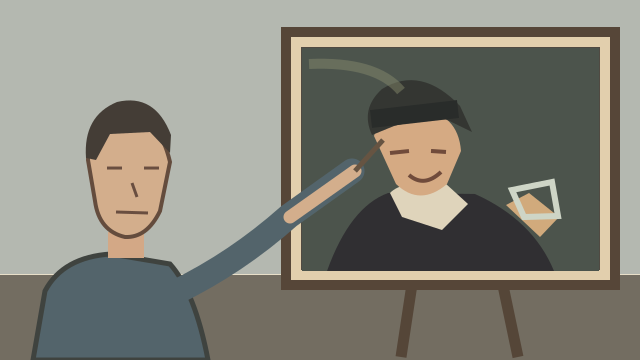
Frans Hals was a Dutch Golden Age painter whose lively portraits, laughing sitters, and energetic brushstrokes captured people with unusual immediacy.

Johannes Vermeer was a Dutch Baroque-era painter famed for quiet interiors, delicate daylight, luminous colors, and closely observed everyday scenes.