
Oil Paint
Oil paint is a slow-drying art medium made with pigment and a drying-oil binder that allows extended working time, smooth blending, and layered application.
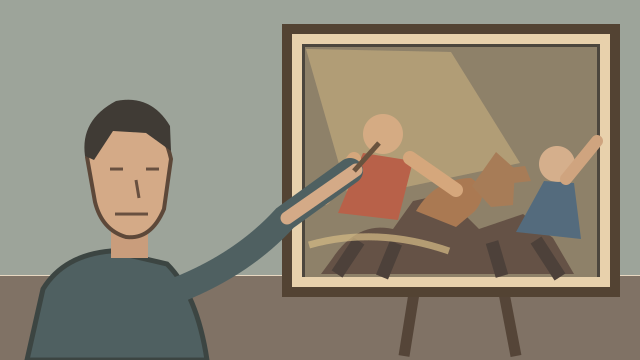
Painter
Peter Paul Rubens was a Flemish Baroque painter celebrated for dynamic mythological scenes, sweeping compositions, rich color, and large oil paintings.
Rubens combined Italian Renaissance influences with vibrant movement and expressive color, working in Antwerp on portraits, altarpieces, and ambitious decorative commissions.
| Born | 1577 · Siegen, County of Nassau (now Germany) |
|---|---|
| Died | 1640 · Antwerp, Spanish Netherlands (now Belgium) |
| Nationality | Flemish |
| Movements | Flemish Baroque |
| Paint types | Oil Paint |
| Painting surfaces | Canvas · Wood |
| Painting methods | Energetic figure drawing, fluid oil brushwork, small preparatory oil studies, large-scale compositions, and workshop collaboration on some projects |
| Common subjects | Biblical narratives, classical mythology, royal and family portraits, hunting scenes, and monumental allegories |
| Notable works | Samson and Delilah · The Fall of Phaeton · Wolf and Fox Hunt · The Descent from the Cross |
| Workshop attribution | The Met credits Wolf and Fox Hunt to Rubens and his workshop, noting the painter's personal work on the wolves. |
Sources: The Met: Wolf and Fox Hunt, oil on canvas, National Gallery: Samson and Delilah, oil on oak, National Gallery of Art: The Fall of Phaeton, oil on canvas.
Oil is documented in Rubens's large canvases, including Wolf and Fox Hunt and The Fall of Phaeton, as well as in his oak-panel Samson and Delilah.
Oil paint is a slow-drying art medium made with pigment and a drying-oil binder that allows extended working time, smooth blending, and layered application.
The Met identifies Wolf and Fox Hunt as oil on canvas; the National Gallery records Samson and Delilah as oil on oak panel.

Canvas is a woven fabric support, commonly cotton or linen, used for painting and sold either raw or prepared with a compatible ground layer.

Wood is a natural, porous material with grain patterns and absorbency that vary by species and cut. Its surface may also contain knots, resin, or an existing finish.
Van Dyck worked in Rubens's Antwerp artistic circle before developing elegant court portraiture, while Velázquez encountered Rubens in Madrid.
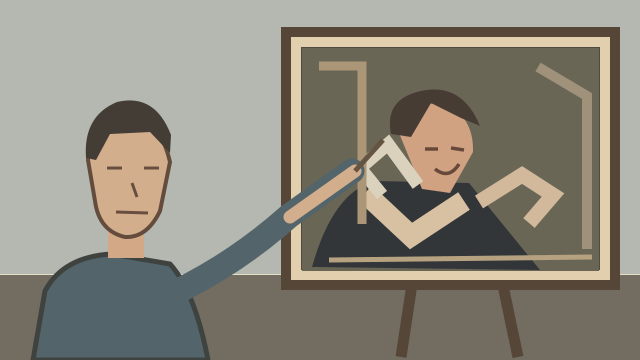
Anthony van Dyck was a Flemish Baroque painter celebrated for elegant royal portraits, expressive gestures, and refined oil-painted figures.
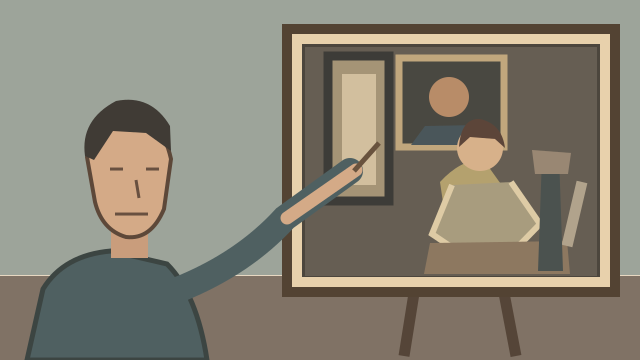
Diego Velázquez was a Spanish Baroque painter whose naturalistic royal portraits, subtle brushwork, and complex interiors transformed European court painting.