
Oil Paint
Oil paint is a slow-drying art medium made with pigment and a drying-oil binder that allows extended working time, smooth blending, and layered application.
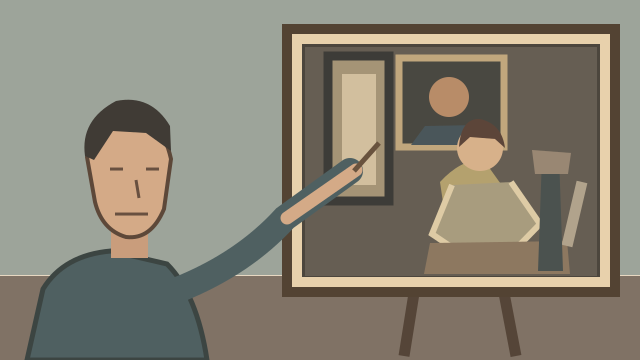
Painter
Diego Velázquez was a Spanish Baroque painter whose naturalistic royal portraits, subtle brushwork, and complex interiors transformed European court painting.
Velázquez began with naturalistic genre and religious scenes in Seville before becoming court painter to Philip IV in Madrid.
| Born | 1599 · Seville, Crown of Castile (now Spain) |
|---|---|
| Died | 1660 · Madrid, Spain |
| Nationality | Spanish |
| Movements | Spanish Baroque |
| Paint types | Oil Paint |
| Painting surfaces | Canvas |
| Painting methods | Direct observation, subtle tonal modeling, varied visible brushstrokes, strategically simplified details, and complex spatial arrangements |
| Common subjects | Spanish royalty, court attendants, working people, mythological scenes, and domestic interiors |
| Notable works | Las Meninas · The Spinners (The Fable of Arachne) · Juan de Pareja · Christ in the House of Martha and Mary |
| Composition | The Prado documents that The Spinners was enlarged after Velázquez's lifetime, changing how viewers perceive its space. |
Sources: Museo del Prado: Las Meninas, oil on canvas, Museo del Prado: The Spinners, oil on canvas, The Met: Juan de Pareja, oil on canvas, National Gallery: Christ in the House of Martha and Mary, oil on canvas.
The Prado catalogs Las Meninas and The Spinners as oil on canvas, and the Met documents Juan de Pareja in the same medium.
Oil paint is a slow-drying art medium made with pigment and a drying-oil binder that allows extended working time, smooth blending, and layered application.
Canvas is the documented support for Las Meninas, The Spinners, Juan de Pareja, and Christ in the House of Martha and Mary.

Canvas is a woven fabric support, commonly cotton or linen, used for painting and sold either raw or prepared with a compatible ground layer.
Rembrandt and Rubens also mastered oil portraiture and Baroque-era storytelling, while Velázquez developed a restrained Spanish court style.
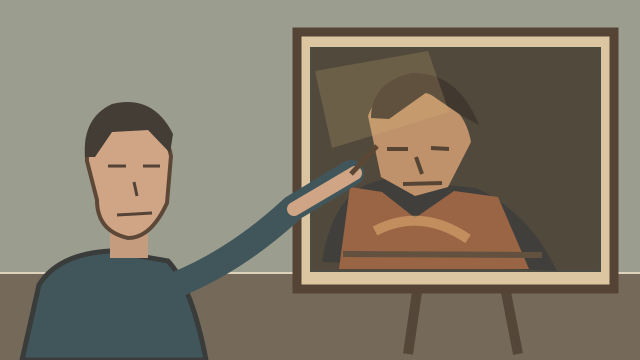
Rembrandt was a Dutch Baroque-era painter celebrated for expressive portraits, biblical scenes, textured oil paint, and subtle theatrical lighting.
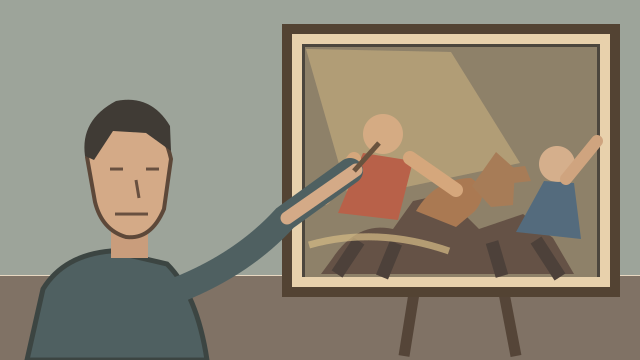
Peter Paul Rubens was a Flemish Baroque painter celebrated for dynamic mythological scenes, sweeping compositions, rich color, and large oil paintings.