
Encaustic Paint
Encaustic paint suspends pigment in a wax-based medium that is melted for application and fused with heat. Beeswax is the main component of many traditional encaustic systems.

Painter
Martin Kline is an American painter known for abstract works built from encaustic and pigmented wax on rigid wood panels, often creating pronounced layered relief.
Review key details about Martin Kline's career, abstract painting practice, encaustic materials, layered relief, and the rigid wood-panel supports that shape his work.
| Born | 1961 · Norwalk, Ohio, U.S. |
|---|---|
| Died | — |
| Nationality | American |
| Movements | Contemporary abstraction |
| Paint types | Encaustic paint · Pigmented wax |
| Painting surfaces | Plywood · Wood panels · Linen · Paper |
| Painting methods | Repeated layers of encaustic and pigmented wax built into projecting relief on rigid panels |
| Common subjects | Abstract blooms, nests, organic forms, layered surfaces, and natural structures |
| Known for | Building heavily textured wax surfaces whose repeated layers project physically from rigid supports |
| Notable works | Nest · Essence · Grey Bloom |
Sources: Whitney Museum of American Art, The Met: Nest, Museum of Fine Arts, Houston: Essence, Museum of Fine Arts, Houston: Abstraction Spectrum, and Whitney: Grey Bloom.
See the paint types documented in Kline's work, with links to PaintZeal references explaining each medium's properties, uses, and working characteristics.
Encaustic paint suspends pigment in a wax-based medium that is melted for application and fused with heat. Beeswax is the main component of many traditional encaustic systems.
See the surface types documented in Kline's work, with links to PaintZeal references explaining how each support behaves and is prepared for painting.
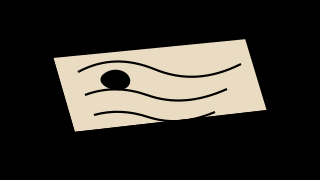
Plywood is an engineered wood panel made by bonding thin veneer layers with alternating grain directions. Its faces, cut edges, and filled areas absorb paint differently.
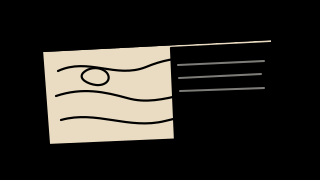
Wood is a natural, porous material with grain patterns and absorbency that vary by species and cut. Its surface may also contain knots, resin, or an existing finish.

Linen is a strong woven fabric made from flax fibers and commonly used as a support for fine-art painting. Artist linen may be sold raw or prepared with a ground layer.

Paper is an absorbent sheet material made primarily from cellulose fibers. Its weight, sizing, surface texture, and wet strength determine how much paint it can accept before buckling, pilling, bleeding, or warping.
Explore painters similar to Martin Kline through encaustic, pigmented wax, layered surfaces, abstraction, and painting built physically on rigid supports.
Betsy Eby is an American painter and musician known for abstract encaustic paintings that connect layered wax, gestural line, color, rhythm, and musical structure.
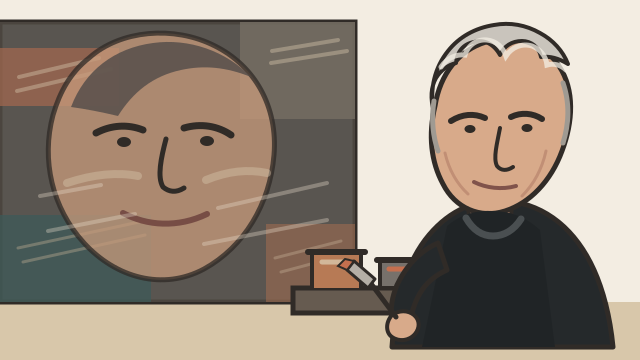
Tony Scherman is a Canadian painter known for figurative and historical paintings made with encaustic, an uncommon wax-and-pigment medium he has used for decades.