
Martin Kline
Martin Kline is an American painter who builds abstract works from encaustic and pigmented wax on rigid wood panels, often creating layered relief.
Painter
Betsy Eby is an American painter and musician known for abstract encaustic works built from layered wax, gestural line, color, and musical structure.
Betsy Eby uses encaustic to build layered abstractions, drawing on musical rhythm and gesture while exploring color, texture, and translucent wax.
| Full name | Betsy Eby |
|---|---|
| Born | 1967 · Seaside, Oregon, U.S. |
| Died | — |
| Nationality | American |
| Movements | — |
| Paint types | Encaustic paint |
| Other media | Classical piano |
| Other materials | — |
| Painting surfaces | Canvas wrapped over birch panels · Linen wrapped over panels · Rigid panels · Aluminum panels · Plastic, including polypropylene YUPO synthetic paper |
| Painting methods | Heating, layering, spreading, and heat-fusing encaustic wax |
| Common subjects | Nature, rhythm, sound, atmosphere, memory, and abstract relationships of line and color |
| Notable works | The New World · Bliss · Yellow Bayou |
Sources: Betsy Eby biography, Betsy Eby artist statement, Betsy Eby: 2025 paintings, YUPO: polypropylene composition, Betsy Eby: acrylic on YUPO, U.S. Department of State Art in Embassies, and Octavia Art Gallery: Bellwether.
The State Department’s Art in Embassies collection documents Eby’s encaustic paintings on panel and canvas-mounted panel, where heated wax fused in layers.

Art in Embassies lists Eby’s Bliss as encaustic on panel and The New World as encaustic on canvas over an aluminum panel. These records document encaustic across distinct support constructions. The aluminum is part of the panel support, not a metallic paint or leaf, while the wax-based medium allows Eby to build and manipulate layered surfaces.
Sources: U.S. Department of State, Art in Embassies: Betsy Eby.; Betsy Eby: recent paintings; Dowling Walsh Gallery: Betsy Eby
Eby’s encaustic works use board, canvas, linen, aluminum, and plastic as supports; the examples distinguish surfaces across her layered wax paintings.

Eby documents canvas wrapped over birch panels in her own studio materials notes, creating a rigid support beneath the textile. This construction combines the painting surface with a wooden backing, rather than treating panel and canvas as unrelated options. It supports her layered and manipulated encaustic works.
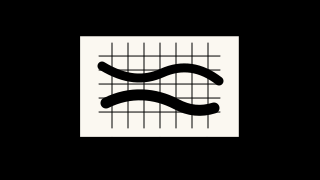
Eby’s paintings use canvas over panel, including works cataloged as encaustic on canvas over aluminum panel. The flexible textile remains the image-bearing surface while the underlying panel provides rigidity. This layered construction is distinct from the linen-covered panels and direct aluminum supports documented elsewhere in her practice.

Eby also wraps linen over panels, preserving the textile weave beneath her layered paint. Her studio notes distinguish this from canvas-over-panel works. The linen support is part of a constructed painting surface and should not be conflated with the wooden or aluminum panel underneath it.

Art in Embassies records The New World as encaustic on canvas over an aluminum panel. This entry refers to the rigid metal backing beneath the textile, not to exposed aluminum as the painted surface or to metallic pigment. The work documents aluminum as a structural support in Eby’s layered construction.
Eby’s small works include acrylic paint on YUPO, a polypropylene sheet rather than conventional cellulose paper. Manufacturer and artist records identify the synthetic support, which provides a smooth, nonabsorbent ground. This material differs from the canvas and linen she mounts over rigid panels.
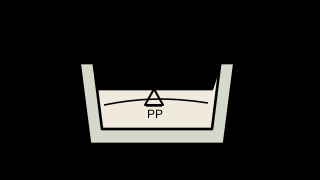
Eby’s use of YUPO is documented in her small acrylic works; YUPO is a polypropylene sheet. The synthetic support is distinct from paper made from plant fibers and from the canvas or linen wrapped over panels in her larger works. This entry uses the material name supported by the artist and manufacturer records.
Sources: Betsy Eby biography, Betsy Eby artist statement, Betsy Eby: 2025 paintings, YUPO: polypropylene composition, Betsy Eby: acrylic on YUPO.
Painters related to Betsy Eby explore encaustic and layered wax, using tactile buildup and wax-based color to create abstract surfaces in practice.
Martin Kline is an American painter who builds abstract works from encaustic and pigmented wax on rigid wood panels, often creating layered relief.
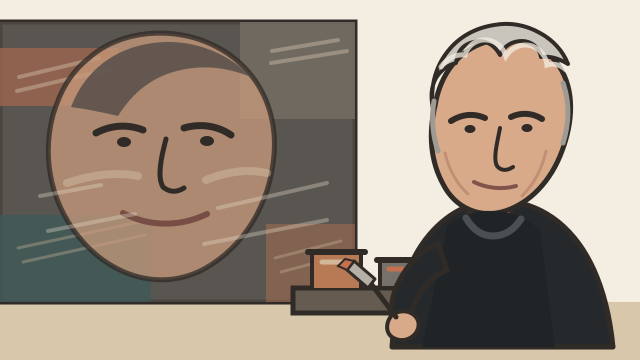
Tony Scherman is a Canadian painter known for figurative and historical paintings made with encaustic, along with documented work in oil and acrylic.

Jasper Johns is an American artist whose paintings rework familiar signs such as flags, targets, numbers, and maps through encaustic and collage.