
Carlo Carrà
Carlo Carrà was an Italian painter who moved from Futurist scenes of crowds and speed to the eerie objects and stillness of Metaphysical Painting.

Painter
Giorgio Morandi was an Italian painter known for hushed still lifes of bottles, boxes, and vases, muted color harmonies, and subtle changes in light.
Morandi briefly explored Metaphysical Painting in 1918, then spent decades arranging still lifes and landscapes in quiet, reduced compositions.
| Full name | Giorgio Morandi |
|---|---|
| Born | 1890 · Bologna, Italy |
| Died | 1964 · Bologna, Italy |
| Nationality | Italian |
| Movements | Metaphysical Painting (brief early period) |
| Paint types | Oil Paint · Watercolor Paint |
| Other media | Etching on paper, distinct from his painting media |
| Other materials | — |
| Painting surfaces | Canvas · Paper |
| Painting methods | Worked from repeatedly arranged objects, mixing restrained colors and refining subtle tonal shifts through close observation of light |
| Common subjects | Bottles, jars, pitchers, boxes, vases, studio tabletops, flowers, and landscapes near Bologna |
| Notable works | Great Metaphysical Still Life · Still Life (1938) · Still-Life (1948–1949) |
Sources: The Met: Giorgio Morandi, 1890–1964, The Met: exhibition gallery documenting oil and watercolor, MoMA: Still Life (1938), oil on canvas, Palazzo Citterio: Great Metaphysical Still Life, oil on canvas.
Morandi revisited bottles, jars, and landscapes in oil and watercolor, using each medium to organize forms, color, and space in distinct ways.

MoMA records Still Life (1938) as oil on canvas. Morandi’s compact arrangements of vessels use restrained color and small tonal changes to distinguish familiar objects. The painting documents oil in a carefully constructed studio still life, distinct from the watercolors he made on paper later in his career.

The Met’s exhibition records two late still lifes from 1962 and 1963 as watercolor on paper. Morandi carried his recurring tabletop subjects into a more open, paper-based medium, using delicate washes rather than the dense surface of his oil paintings on canvas. These records document watercolor in his later practice.
Sources: MoMA: Still Life (1938), oil on canvas; The Met: Morandi exhibition gallery, including watercolors on paper.; The Met: Giorgio Morandi exhibition
Collection entries identify canvas and paper among Giorgio Morandi’s supports, with the examples below grounding each material in documented works.

Morandi’s still lifes, including MoMA’s Still Life (1938), are documented on canvas. The support carries his restrained arrangements of bottles and jars, where slight shifts in tone and spacing shape the composition. These oil paintings are distinct from later watercolor still lifes on paper.

Morandi also made works on paper, including watercolors and drawings documented in The Met’s retrospective. His late watercolor still lifes use a flexible sheet rather than canvas, leaving more open space around the familiar vessels. Collection records document paper as a separate support in his practice.
Sources: The Met: Giorgio Morandi, 1890–1964, The Met: exhibition gallery documenting oil and watercolor, MoMA: Still Life (1938), oil on canvas, Palazzo Citterio: Great Metaphysical Still Life, oil on canvas.
Carrà and de Chirico shared Morandi’s short Metaphysical period, although Morandi later pursued quieter, more observational still lifes after 1920.
Carlo Carrà was an Italian painter who moved from Futurist scenes of crowds and speed to the eerie objects and stillness of Metaphysical Painting.
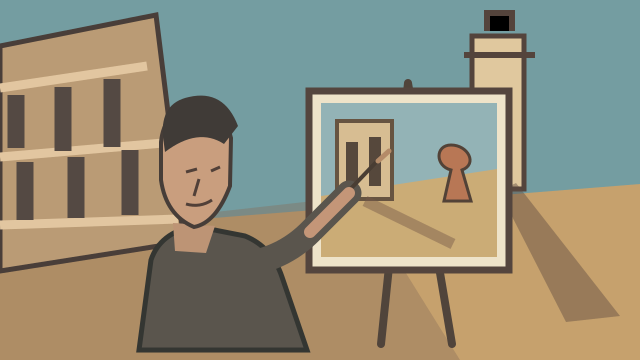
Giorgio de Chirico was an Italian painter who pioneered Metaphysical Painting with deserted plazas, classical statues, long shadows, and unsettling spaces.