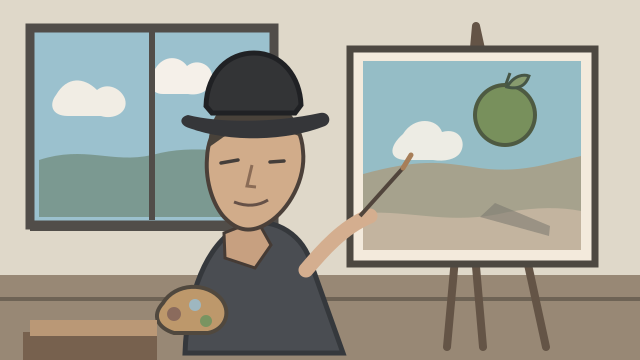
René Magritte
René Magritte was a Belgian Surrealist painter known for placing familiar objects in puzzling scenes that challenge how images represent reality.
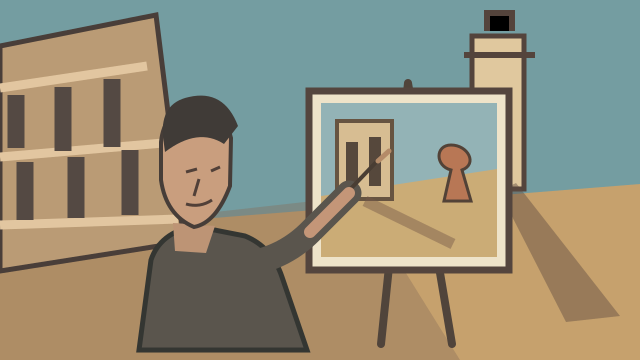
Painter
Giorgio de Chirico was an Italian painter who pioneered Metaphysical Painting with deserted plazas, classical statues, long shadows, and unsettling spaces.
De Chirico developed mysterious architectural scenes before joining Carlo Carrà to establish the short-lived Metaphysical School in Ferrara in 1917.
| Full name | Giorgio de Chirico |
|---|---|
| Born | July 10, 1888 · Volos, Greece |
| Died | November 20, 1978 · Rome, Italy |
| Nationality | Italian (born in Greece) |
| Movements | Metaphysical Painting; important influence on Surrealism |
| Paint types | Oil paint · Watercolor · Artist tempera (binder unspecified) |
| Other media | — |
| Other materials | — |
| Painting surfaces | Canvas · Paper · Cardboard |
| Painting methods | Used precise oil rendering and deliberately conflicting perspectives; also painted in tempera and watercolor and developed pencil and charcoal studies |
| Common subjects | Empty piazzas, arcades, statues, mannequins, trains, classical objects, and unfamiliar interiors |
| Notable works | The Enigma of an Autumn Afternoon · The Nostalgia of the Infinite · The Enigma of a Day |
Sources: MoMA: Giorgio de Chirico, MoMA: The Enigma of a Day, Fondazione Giorgio e Isa de Chirico: collection, National Galleries of Scotland: Giorgio de Chirico, Pera Museum: Self-Portrait in Armour, and Wadsworth: tempera theater design.
De Chirico painted early Metaphysical piazzas in oil, then used tempera and watercolor for portraits and theater designs later in his career.

The Red Tower (1913), oil on canvas, sets a tall structure and distant equestrian monument in an empty square with disquieting shadows. The Enigma of a Day (early 1914), also oil on canvas, uses tilted perspectives, classical architecture, and a tiny figure to make an ordinary piazza feel unfamiliar. These were precursors of Surrealism, not examples of watercolor or fresco.

The Wadsworth Atheneum identifies graphite and tempera on handmade paper in de Chirico's Costume design for the Astrologer in “Le Bal” (1929). The binder of the tempera is not specified in these records; neither example establishes that his 1910s piazzas were tempera paintings.

De Chirico also used watercolor for costume designs associated with Le Bal, the Ballets Russes production of 1929. A MoMA exhibition catalogue records Costume for the Woman in the Italian Entrée as pencil, watercolor, and gouache on paper, held by the Wadsworth Atheneum. That painted paper design is distinct from his architectural oils.
Sources: Guggenheim: The Red Tower, oil on canvas, MoMA: The Enigma of a Day, oil on canvas, Pera Museum: Self-Portrait in Armour, tempera and oil, Wadsworth Atheneum: graphite and tempera costume design, and MoMA: de Chirico exhibition catalogue (watercolor costume designs).
Collection entries identify canvas and paper among Giorgio de Chirico’s supports, with the examples below grounding each material in documented works.

De Chirico’s paintings, including The Enigma of a Day and The Red Tower, are documented on canvas. The support carries his oil paintings of classical architecture and empty piazzas, where shadows and unusual perspective make familiar spaces feel strange. These canvases are distinct from his costume designs on paper.

De Chirico used paper for drawings and costume designs, including watercolor and gouache sheets associated with Le Bal. The works document a separate design practice from his oil paintings on canvas. Collection records identify the sheet support directly for these mixed-media designs.

De Chirico also used cardboard in selected works and studies, as documented by museum records. The rigid paper-based support differs from canvas and from loose paper sheets. This row reflects specific collection evidence and does not imply cardboard was a standard surface across his practice.
Sources: MoMA: Giorgio de Chirico, MoMA: The Enigma of a Day, Fondazione Giorgio e Isa de Chirico: collection, National Galleries of Scotland: Giorgio de Chirico, Pera Museum: Self-Portrait in Armour.
Magritte and Dalí explored uncanny imagery that de Chirico’s earlier Metaphysical paintings helped inspire, though their styles later diverged.
René Magritte was a Belgian Surrealist painter known for placing familiar objects in puzzling scenes that challenge how images represent reality.

Salvador Dalí was a Spanish Surrealist painter known for meticulously rendered dream scenes, uncanny objects, and precise oil-painting techniques.