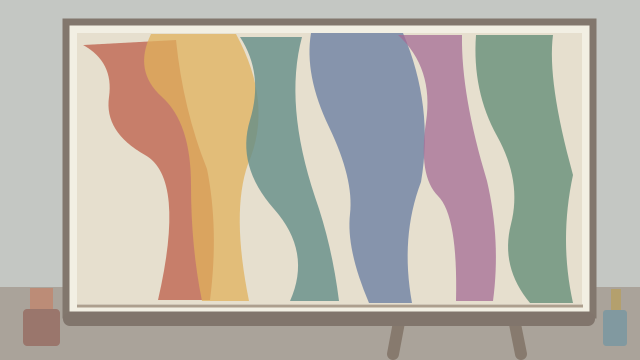
Morris Louis
Morris Louis was an American Color Field painter who poured diluted Magna acrylic resin onto raw canvas, creating luminous Veils, Unfurleds, and Stripes.
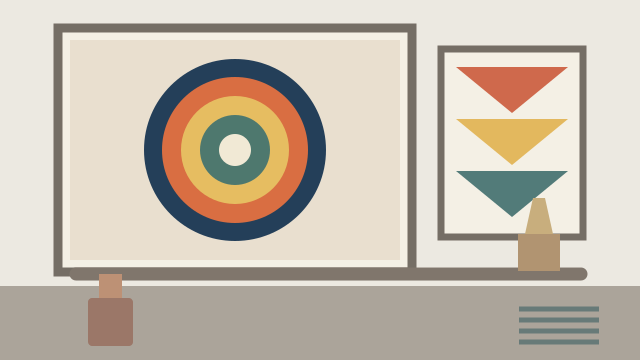
Painter
Kenneth Noland was an American Color Field painter who built abstract compositions from rings, chevrons, stripes, and carefully balanced expanses of color.
Noland helped shape postwar American abstraction with geometric compositions that made color, edge, and the canvas format central to painting.
| Full name | Kenneth Clifton Noland |
|---|---|
| Born | April 10, 1924 · Asheville, North Carolina, U.S. |
| Died | January 5, 2010 · Port Clyde, Maine, U.S. |
| Nationality | American |
| Movements | Color Field Painting · Washington Color School · Post-Painterly Abstraction |
| Paint types | Oil paint and acrylic paint |
| Other media | — |
| Other materials | — |
| Painting surfaces | Canvas, including unprimed canvas |
| Painting methods | Applied thinned paint directly to unprimed canvas, including in his circle paintings |
| Common subjects | Abstract circles, concentric rings, chevrons, diamonds, stripes, and bands of color |
| Notable works | The Clown (1959) · Dawn’s Road (1970) · Another Time (1973) |
Sources: Smithsonian American Art Museum: biography and practice; National Gallery of Art: artist and selected works; National Gallery of Art: The Clown.
Noland used oil and acrylic on canvas, while his experiments with unprimed supports brought the paint’s application and the canvas weave into view.
The National Gallery of Art records Noland’s The Clown (1959) as oil on canvas. Its concentric rings organize color around a central circle, an early example of his circle paintings. This record establishes an oil-painting phase before his later acrylic canvases.
Noland used acrylic on canvas in later works including Dawn’s Road (1970) and Another Time (1973). These paintings arrange color through parallel bands or geometric divisions rather than a central target. Museum collection records identify acrylic in these later works, distinguishing them from his earlier oil circles.
Sources: National Gallery of Art: The Clown, oil on canvas, National Gallery of Art: Dawn’s Road, acrylic on canvas, and National Gallery of Art: Another Time, acrylic on canvas.
Noland worked on canvas, including unprimed supports that let the fabric remain visible and made the surface part of his experiments with color.
Noland experimented with unprimed canvas and thinned paint, allowing the support’s weave and the act of application to contribute to the finished image. The Smithsonian describes his circle paintings as attempts to make a single expressive entity, often developed in a rapid “one shot” approach.
Sources: Smithsonian American Art Museum: Kenneth Noland’s use of unprimed canvas; National Gallery of Art: Brown Stretched; The Met: October; MoMA: Turnsole.
His work links Color Field painters who used geometric shapes, vertical divisions, and stained canvas to make color carry the structure of a painting.
Morris Louis was an American Color Field painter who poured diluted Magna acrylic resin onto raw canvas, creating luminous Veils, Unfurleds, and Stripes.
Helen Frankenthaler was a painter whose soak-stain technique let thinned paint enter raw canvas, changing postwar artists’ approach to the support.
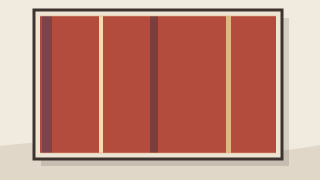
Barnett Newman was an American abstract painter known for vast, often monochromatic color fields interrupted by narrow vertical stripes he called zips.