
Oil Paint
Oil paint is a slow-drying art medium made with pigment and a drying-oil binder that allows extended working time, smooth blending, and layered application.
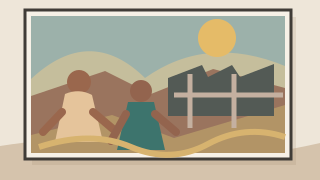
Painter
Diego Rivera was a Mexican painter and muralist whose frescoes depicted workers, industry, national history, and everyday life on monumental public walls.
Rivera's practice ranged from early Cubist oil paintings to large public frescoes. These media and supports are documented for particular works and should not be treated as interchangeable.
| Born | 1886 · Guanajuato, Mexico |
|---|---|
| Died | 1957 · Mexico City, Mexico |
| Nationality | Mexican |
| Movements | Mexican Muralism; earlier Cubism while working in Paris |
| Paint types | Oil paint · tempera (documented in The Flower Carrier) · fresco pigments applied to wet lime plaster |
| Painting surfaces | Lime plaster for fresco · Masonite board · canvas |
| Painting methods | Fresco: pigments bound within damp plaster as it cures; also composed large figured scenes and painted separate oil and tempera works |
| Common subjects | Mexican history, working people, Indigenous culture, agriculture, machinery, industry, and social struggle |
| Notable works | Detroit Industry Murals (1932–33) · Agrarian Leader Zapata (1931) · The Flower Carrier (1935) |
Sources: MoMA: Diego Rivera, MoMA: Agrarian Leader Zapata, SFMOMA: The Flower Carrier, The Met: The Café Terrace, Detroit Institute of Arts: Detroit Industry Murals.
Rivera's earlier Cubist paintings include oil on canvas, while The Flower Carrier combines oil and tempera on Masonite. His major public murals used fresco, with pigment applied to fresh plaster rather than conventional tube paint.
Oil paint is a slow-drying art medium made with pigment and a drying-oil binder that allows extended working time, smooth blending, and layered application.

Traditional tempera is an artist paint made from pigment and an emulsion binder, with egg yolk the best-known binder among several historical formulations.
Rivera built architectural frescoes on prepared plaster; MoMA's 1931 portable murals instead used fresco on reinforced cement with steel frameworks. Studio works were also painted on canvas and Masonite.

Plaster is a mineral wall finish made from gypsum, lime, cement, or similar binders, with porosity and moisture content changing as the material cures and dries.

Painting board is a rigid artist support made from hardboard, wood, or another stable panel, sold either raw or prepared with a medium-specific ground.

Canvas is a woven fabric support, commonly cotton or linen, used for painting and sold either raw or prepared with a compatible ground layer.
Rivera's public storytelling relates most closely to fellow Mexican muralists Orozco and Siqueiros, although their visual styles and political interpretations differed.

José Clemente Orozco was a Mexican muralist whose dramatic frescoes and paintings examined revolution, human suffering, political conflict, and social change.

David Alfaro Siqueiros was a Mexican painter and muralist known for using industrial materials and methods, including lacquer, enamel, pyroxylin, and automotive coatings.