Chalkboard Paint
Chalkboard paint is a functional coating formulated to create a surface that can be written on with chalk and erased. It is different from chalk paint, which is a decorative matte furniture and décor coating.

Painter
Gary Simmons is an American artist known for drawing on chalkboard-like painted grounds and then smearing or erasing the image to create blurred, partially removed forms.
Review key details about Gary Simmons's career, chalkboard-like painted grounds, drawing, smearing, erasure, and the blurred visual effects that shape his work.
| Born | April 14, 1964 · New York City, New York, U.S. |
|---|---|
| Died | — |
| Nationality | American |
| Movements | — |
| Paint types | Chalkboard paint · Acrylic paint · Oil paint |
| Other media | White pigment, pastel, charcoal, drawing, installation, and sculpture |
| Painting surfaces | Painting board · Walls · Paper · Canvas · Wood panels |
| Painting methods | Draws on prepared dark panels, then rubs and partially erases unfixed marks by hand to create blurred, ghostlike images |
| Common subjects | Cartoons, race, memory, violence, popular culture, and partially erased imagery |
| Known for | Erasure works that connect cartoons, memory, violence, race, popular culture, and the physical act of removing an image |
| Notable works | Ghoster · Hey, Hey, Hey... · boom |
Sources: MoMA: boom, Whitney: Hey, Hey, Hey..., Modern Art Museum of Fort Worth, Rubell Museum, and Whitney Museum of American Art.
See the paint types documented in Simmons's work, with links to PaintZeal references explaining each medium's properties, uses, and working characteristics.
Chalkboard paint is a functional coating formulated to create a surface that can be written on with chalk and erased. It is different from chalk paint, which is a decorative matte furniture and décor coating.
Acrylic paint is a fast-drying, water-based paint made with pigment and an acrylic polymer binder. It is widely used in art and decorative projects because it is versatile and durable.

Oil paint is a slow-drying paint made with pigment and a drying oil binder. It is widely used for artwork because it blends smoothly and develops rich color.
See the surface types documented in Simmons's work, with links to PaintZeal references explaining how each support behaves and is prepared for painting.

Painting board is a rigid artist support made from hardboard, wood, or another stable panel material. It may be sold raw or prepared with a medium-specific ground layer.
Plaster is a smooth or textured wall finish made from gypsum, lime, cement, or similar mineral binders. New plaster remains porous as it cures and dries.

Paper is an absorbent sheet material made primarily from cellulose fibers. Its weight, sizing, surface texture, and wet strength determine how much paint it can accept before buckling, pilling, bleeding, or warping.
Canvas is a woven fabric support used for paintings, banners, bags, décor, and other projects. Artist canvas may be raw, sized, acrylic-primed, oil-primed, or factory-coated, and each condition changes how paint absorbs and bonds.
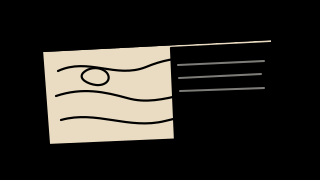
Wood is a natural, porous material with grain patterns and absorbency that vary by species and cut. Its surface may also contain knots, resin, or an existing finish.
Explore painters similar to Gary Simmons through text and image, erasure, repeated marks, commercial materials, and concept-driven contemporary painting.
Christopher Wool is an American painter known for black enamel paintings, especially works on white aluminum panels made with stencils, patterned rollers, screens, and spray paint.
Keith Haring was an American artist known for outlined figures, public murals, subway drawings, vivid color, and recurring imagery addressing social and political themes.