
Oil Paint
Oil paint is a slow-drying art medium made with pigment and a drying-oil binder that allows extended working time, smooth blending, and layered application.
Painter
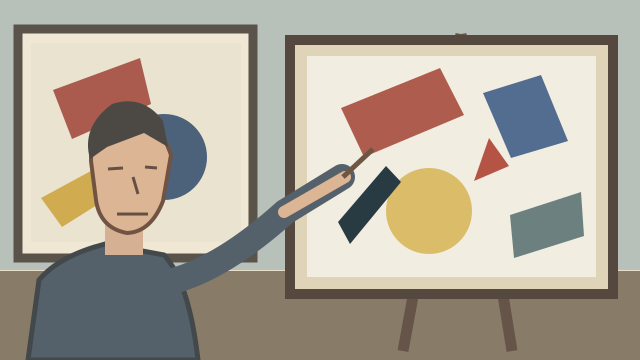
Ivan Kliun was a Russian avant-garde painter who explored Suprematist geometry, isolated colored shapes, and later experiments with light.
Kliun worked alongside Kazimir Malevich before developing an interest in how color, form, light, and texture interact in nonrepresentational art.
| Born | 1873 · Bolshie Gorki, Russian Empire |
|---|---|
| Died | 1943 · Moscow, Soviet Union |
| Nationality | Russian |
| Movements | Suprematism (1915–1919) |
| Paint types | Oil Paint |
| Painting surfaces | Canvas |
| Painting methods | Isolated angular shapes on pale backgrounds, contrasting colors, and experiments with apparent illumination and surface texture |
| Common subjects | Non-objective geometry, floating angular forms, white grounds, and abstract relationships of light and color |
| Notable works | Composition (1917) |
| Other work | Investigated relief constructions that combined painted and sculptural techniques |
Sources: Museo Thyssen-Bornemisza: Ivan Kliun biography, Museo Thyssen-Bornemisza: Composition (1917), oil on canvas.
Museo Thyssen-Bornemisza documents Kliun's Suprematist Composition (1917) in oil on canvas.
Oil paint is a slow-drying art medium made with pigment and a drying-oil binder that allows extended working time, smooth blending, and layered application.
Canvas is directly documented for Kliun's 1917 oil painting Composition; drawing and constructed reliefs were separate practices.

Canvas is a woven fabric support, commonly cotton or linen, used for painting and sold either raw or prepared with a compatible ground layer.
Kliun worked within Malevich's Suprematist circle alongside Rozanova, sharing an interest in independent color and geometry.

Kazimir Malevich was a Kyiv-born avant-garde painter who founded Suprematism, reducing painting to geometric shapes, color, and the texture of oil on canvas.
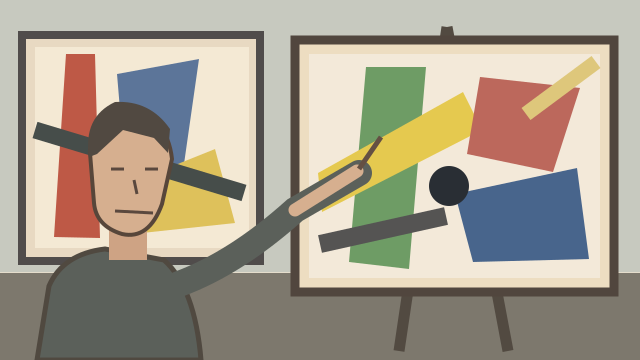
Olga Rozanova was a Russian avant-garde painter whose bold Suprematist compositions and pure-color experiments pushed abstraction beyond recognizable forms.