Andrew Wyeth
Andrew Wyeth was an American painter known for closely observed landscapes, interiors, and people from Chadds Ford, Pennsylvania, and coastal Maine.
Painter
Josephine Halvorson is a painter who works on location with fast-drying acrylic gouache on absorbent grounds and spray paint in site-responsive projects.
Halvorson’s quick facts cover her on-location painting process, acrylic-gouache use, absorbent grounds, and how the prepared surface shapes each work.
| Full name | Josephine Halvorson |
|---|---|
| Born | 1981 · Brewster, Massachusetts, U.S. |
| Died | — |
| Nationality | American |
| Movements | — |
| Paint types | Acrylic gouache · Oil paint (earlier work) |
| Other media | — |
| Other materials | — |
| Painting surfaces | Dibond aluminum-composite panels · Wood · Linen (earlier oil paintings) · Paper |
| Painting methods | Paints directly from observation, often on site; applies fast-drying acrylic gouache to absorbent grounds, preserving individual strokes without wiping them away |
| Common subjects | Ordinary objects, structures, signs, working surfaces, landscapes, and specific places |
| Notable works | Measure (Tree) · Ground Register: Markings / Gravel · Mine Ground (Earth) |
Sources: Georgia O'Keeffe Museum: Josephine Halvorson, Georgia O'Keeffe Museum: Place and Presence, Georgia O'Keeffe Museum: Conversation with the Artist, Storm King Art Center: Outlooks: Josephine Halvorson, The Trustees: Measure (Tree), Peter Blum Gallery: Mine Ground works, and Josephine Halvorson: On The Ground.
Halvorson moved from oil on linen to water-based acrylic gouache, documented by the Georgia O’Keeffe Museum catalogue in paintings made on site.

In the Georgia O’Keeffe Museum catalogue, Halvorson describes moving from oil toward water-based acrylic gouache. Its opacity and quick drying suit her direct observations; she says the strokes are permanent rather than wipeable. The medium supports her focused work from life, recording the marks and wear she finds on objects.

Halvorson identifies oil on linen as an earlier material in her practice. She explains that oil allowed her to wipe away and revise decisions before adopting acrylic gouache, whose strokes set quickly. This contrast in working time is documented in her own account and helps distinguish the media in her practice.
Sources: Georgia O'Keeffe Museum: Place and Presence; Georgia O'Keeffe Museum: Conversation with the Artist; Georgia O’Keeffe Museum: O’Keeffe’s Rocks.
Collection records document Josephine Halvorson's use of painting board, aluminum, and wood, while examples below connect each support to a named work.

Halvorson paints on rigid panels, including Dibond aluminum-composite supports, often working directly from observed objects. The stable panel can be positioned in front of a subject while she records its surface and condition; this is a different setup from her earlier oil paintings on linen.

Halvorson has used aluminum panels, including Dibond, in her direct observational paintings. The hard, smooth surface is documented in her museum profile and contrasts with linen, which she used for earlier oil work. This row describes the actual panel material, not merely a frame or backing.
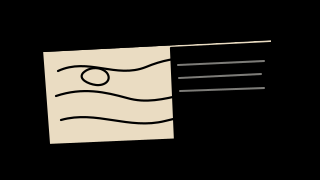
Halvorson has painted on wood, studying the object’s existing surface and marks as she works. The support becomes part of the close observation that informs her paintings, rather than a neutral ground; this is one of several documented rigid panels in her practice.

Linen appears in Halvorson’s earlier oil paintings, as described in her account to the Georgia O’Keeffe Museum. Her later preference for acrylic gouache changed the medium and working time, but the linen supports document an earlier period in her practice.

Halvorson’s works on paper document a portable support for her observational painting and drawing. The sheet format differs from the rigid panels and linen canvases she uses in other works, giving her another way to study surfaces and objects directly.
Sources: Georgia O'Keeffe Museum: Josephine Halvorson, Georgia O'Keeffe Museum: Place and Presence, Georgia O'Keeffe Museum: Conversation with the Artist, Storm King Art Center: Outlooks: Josephine Halvorson, The Trustees: Measure (Tree).
Explore painters connected to Halvorson through close observation, everyday subjects, restrained realism, and direct responses to local environments.
Andrew Wyeth was an American painter known for closely observed landscapes, interiors, and people from Chadds Ford, Pennsylvania, and coastal Maine.
Edward Hopper was an American realist painter whose city interiors, roadside buildings, and coastal landscapes use strong light and geometric composition.