Acrylic Paint
Acrylic paint is a fast-drying, water-based paint made with pigment and an acrylic polymer binder that forms a durable film on many prepared surfaces.
Painter
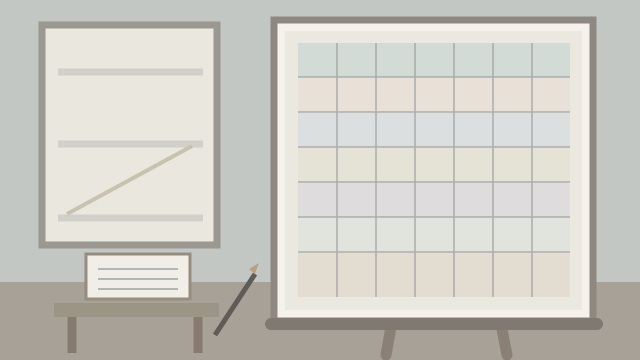
Agnes Martin was a Canadian-born American painter known for quiet abstract grids and stripes, delicate pencil lines, and softly colored canvases.
Although frequently associated with Minimalism, Martin described a more emotional and contemplative purpose than the industrial or impersonal approach of some Minimalist artists.
| Born | March 22, 1912 · Macklin, Saskatchewan, Canada |
|---|---|
| Died | December 16, 2004 · Taos, New Mexico, U.S. |
| Nationality | American (born in Canada) |
| Movements | Minimalism (associated, with qualifications) · Abstract Expressionism (related outlook) |
| Paint types | Acrylic paint · oil paint (earlier paintings) · watercolor (works on paper); graphite, ink, and gesso also documented |
| Painting surfaces | Canvas · paper (watercolors and other studies) |
| Painting methods | Used gessoed canvases, ruler-guided pencil grids, and thin acrylic color washes; sometimes worked with rotated canvases to control diluted paint |
| Common subjects | Nonrepresentational grids, lines, bands, and subtle colors meant to evoke quiet, beauty, and emotional experience |
| Notable works | The Tree (1964) · Untitled #1 (1981) · With My Back to the World (1997) |
Sources: MoMA: Untitled #1 (acrylic, gesso, pencil), MoMA: Untitled (1952 watercolor), Guggenheim: Little Sister (oil and ink), Guggenheim: Martin and Minimalism, Smithsonian: Agnes Martin.
MoMA documents acrylic and gesso with graphite on Untitled #1 and watercolor on paper in a 1952 Untitled. The Guggenheim also records oil and ink in her early-1960s Little Sister. Pencil and gesso are important materials but are not paint types.
Acrylic paint is a fast-drying, water-based paint made with pigment and an acrylic polymer binder that forms a durable film on many prepared surfaces.

Oil paint is a slow-drying art medium made with pigment and a drying-oil binder that allows extended working time, smooth blending, and layered application.

Watercolor paint is a water-based art medium made with pigment and a water-soluble binder, typically applied in transparent washes on absorbent paper.
Martin's late large-scale stripe and grid paintings used prepared canvas; works on paper, including watercolors, are separately documented and should not be confused with those paintings.

Canvas is a woven fabric support, commonly cotton or linen, used for painting and sold either raw or prepared with a compatible ground layer.

Paper is an absorbent sheet material made from pressed fibers, with weight, sizing, and surface texture controlling moisture tolerance and paint behavior.
Baer and Ryman shared Martin's interest in restrained painted surfaces but used different optical and material strategies. Newman and Rothko offer broader parallels in the emotional effects of abstract color.

Barnett Newman was an American abstract painter known for vast, often monochromatic color fields interrupted by narrow vertical stripes he called zips.
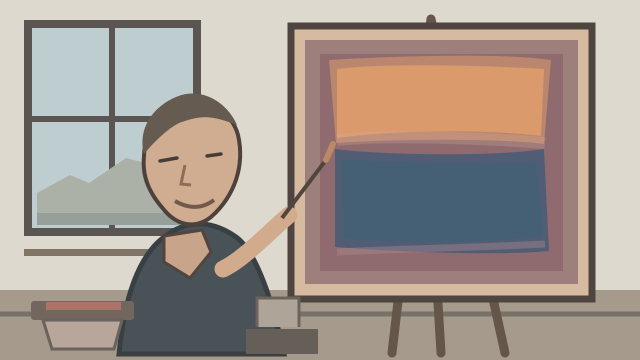
Mark Rothko was an American abstract painter known for large canvases with softly edged fields of color and a focus on the emotional impact of painting.
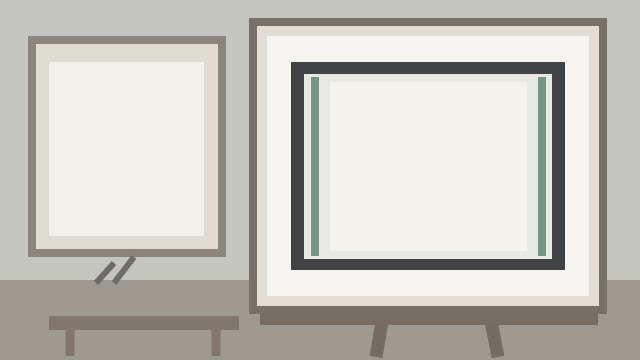
Jo Baer was an American painter known for sharply defined Minimalist canvases with slim color bands near their edges and for a later return to figurative imagery.

Robert Ryman was an American painter known for exploring the physical behavior of mostly white paint on different supports, with brushstrokes, surfaces, and mounting hardware as visible parts of the work.