
Oil Paint
Oil paint is a slow-drying art medium made with pigment and a drying-oil binder that allows extended working time, smooth blending, and layered application.
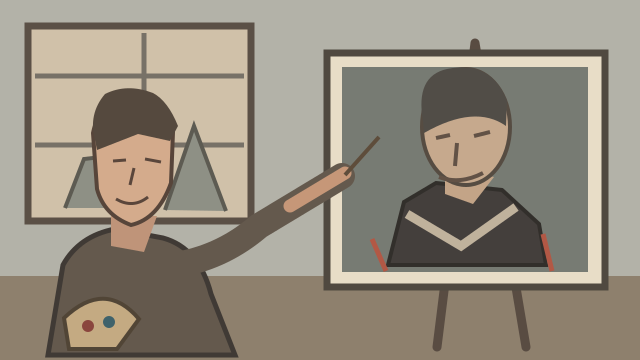
Painter
Otto Dix was a German painter associated with New Objectivity, known for sharp Weimar-era portraits, war imagery, and unsettling depictions of modern life.
Dix's experience as a soldier informed portraits and wartime images whose controlled, often unsentimental detail became central to New Objectivity.
| Born | 1891 · Untermhaus near Gera, German Empire |
|---|---|
| Died | 1969 · Singen, West Germany |
| Nationality | German |
| Movements | New Objectivity; earlier Expressionist experiments |
| Paint types | Oil Paint · Watercolor Paint · Tempera (binder unspecified) |
| Painting surfaces | Wood · Canvas · Paper |
| Painting methods | Exacting figural modeling, tightly controlled paint layers, satirical emphasis, and traditional-looking oil and tempera techniques |
| Common subjects | Veterans, doctors, performers, wartime injuries, portraits, nightlife, and inequality in Weimar society |
| Notable works | Dr. Mayer-Hermann · Portrait of the Art Dealer Johanna Ey · The War · Skat Players |
| Other paint media | Tempera in documented works, including oil-and-tempera portraits on wood; binder unspecified |
| Other materials | Metal leaf in Dr. Mayer-Hermann |
Sources: MoMA: Otto Dix, MoMA: Dr. Mayer-Hermann, MoMA: Portrait of Violinist Carlo von Rust, Kunstsammlung NRW: Johanna Ey, oil on canvas, Leopold Museum: Rosa, watercolor on paper.
Dix combined oil and tempera in some portraits, painted other works in oil, and used watercolor for sharp studies of contemporary figures.
Oil paint is a slow-drying art medium made with pigment and a drying-oil binder that allows extended working time, smooth blending, and layered application.

Watercolor paint is a water-based art medium made with pigment and a water-soluble binder, typically applied in transparent washes on absorbent paper.
Dix painted some portraits on wood panels and canvas, while paper supported documented pencil-and-watercolor portraits and studies.

Wood is a natural, porous material whose grain, absorbency, knots, resin, species, and existing finish all influence paint preparation and adhesion.

Canvas is a woven fabric support, commonly cotton or linen, used for painting and sold either raw or prepared with a compatible ground layer.

Paper is an absorbent sheet material made from pressed fibers, with weight, sizing, and surface texture controlling moisture tolerance and paint behavior.
Cadmus and Tooker provide useful comparisons through precise figuration, social unease, and historical tempera techniques, despite differing movements.

Paul Cadmus was an American painter known for figurative paintings, social satire, sustained use of egg tempera, and casein, watercolor, and gouache studies on paper.

George Tooker was an American painter known for egg tempera scenes of offices, subways, waiting rooms, and other modern spaces, often centered on isolation and social tension.